
Having learnt a little more about the workings of Fusion 360, I've finally been able to print the signal box for my, hopefully soon to be built, layout of Gareochhead. Although in the first couple of iterations I had managed to achieve really fine window glazing bars, I realised they were likely going to cause issues when trying to assembly. I've thus resorted to a slightly overscale window thickness to include a slit to drop in 0.254mm clear glazing material. My first attempt resulted in slits that seemed heal themselves! So, gap widened slightly more, which seems to have cured the problem.
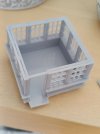
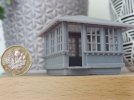
Photographs are a little brutal as I've only just started the cleaning up process! But, the next process will obviously be painting. I printed with Elegoo ABS like resin, and I would like to ask the assembled throng how best to paint. I've only looked at forums briefly and didn't notice anything. I would have assumed rattle can primer followed by acrylics, but am not sure on what paint will adhere to the resin.
Once I've done this, the station building will be next (building in four parts and roof in five!)
I look forward to the knowledge of the assembled throng with anticipation.
Paul
Photographs are a little brutal as I've only just started the cleaning up process! But, the next process will obviously be painting. I printed with Elegoo ABS like resin, and I would like to ask the assembled throng how best to paint. I've only looked at forums briefly and didn't notice anything. I would have assumed rattle can primer followed by acrylics, but am not sure on what paint will adhere to the resin.
Once I've done this, the station building will be next (building in four parts and roof in five!)
I look forward to the knowledge of the assembled throng with anticipation.
Paul


