Ian_T
Western Thunderer
I asked earlier today what everyone was doing and then mangaged to divert the thread into other (non-Gauge 3) areas....
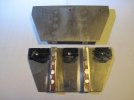
As a smalI penance, I thought some here might be mildly interested in one of my 'Butterfly' projects (e.g. the unfinished ones) and decided that the Muir Hill might be a good place to start. In May 1996, 'Modelling Railways Illustrated' (now long defunct) published some plans for a tiny 4mm loco based on a Tenshodo bogie. The article was called "The Muir-Hill Project" and I thought at the time that it would make an interesting small G3 engine. So (some years later) I made a chassis based on the drawings in 1.5mm mild steel.

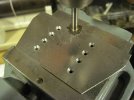

It progressed a little further than this but (as usual) I was diverted onto something else (which I think was probably the Sentiel 4wVBT Mike...) and the Muir Hill was put to one side...
The MH story didn't end there, although some time passed before I returned to it - but perhaps that's enough for tonight.
Take care everyone..
Regards,
IanT
As a smalI penance, I thought some here might be mildly interested in one of my 'Butterfly' projects (e.g. the unfinished ones) and decided that the Muir Hill might be a good place to start. In May 1996, 'Modelling Railways Illustrated' (now long defunct) published some plans for a tiny 4mm loco based on a Tenshodo bogie. The article was called "The Muir-Hill Project" and I thought at the time that it would make an interesting small G3 engine. So (some years later) I made a chassis based on the drawings in 1.5mm mild steel.
It progressed a little further than this but (as usual) I was diverted onto something else (which I think was probably the Sentiel 4wVBT Mike...) and the Muir Hill was put to one side...
The MH story didn't end there, although some time passed before I returned to it - but perhaps that's enough for tonight.
Take care everyone..
Regards,
IanT