
You are using an out of date browser. It may not display this or other websites correctly.
You should upgrade or use an alternative browser.
You should upgrade or use an alternative browser.
Nick Dunhill's Workbench - BR STD 3 from a Scorpio kit.
- Thread starter Nick Dunhill
- Start date

Nick Dunhill
Western Thunderer
Some have sloping fronts as well just to make them a bit harder.
Nick Dunhill
Western Thunderer
I have been moving the cab along this week. It was only a 3 day week as I had family commitments.
I assumed that Standard cabs were simple, as the pipework is out of doors. Well I was wrong.
I made a fair bit of interior and decided I couldn't carry on without a roof. Of course all the dimensions of the cab had been changed, so I didn't waste any time trying to salvage etches for the roof.

I ended up cutting and forming three roof panels before I was satisfied. I cut one that was too short to span the roof, and kinked another forming it. The third was fine. I drew round the square section of the cab front and cut out a rib to get the roof panel into the correct shape in the middle, then adjusted the side parts over the diagonal areas of the cab front. When I was happy with the cab front I drew round the profile (before cutting away for the diagonal areas) and made a rib for the rear of the cab sides. I then made a rib for the rear extension of the roof. Next I cut out the front diagonal areas to match the cab front, and added all the ribs on the underside of the roof.


I added the rain strips from 0.5 mm rod and riveted strip and made a roof vent.
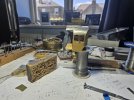
Standard roofs are a bit tricky to make.
I spent the rest of the working week adding more cab detail. I found better castings for the reverser mechanism, so will exchange those next week.


I have just got the gauges, AWS gear, window glass and main handrail to fit. Then the cab will need grafting onto the footplate and the whole assembly mounting onto the chassis. Easy!
This job is becoming quite a marathon. There is just about enough in the kit to give a shakey foundation but there's a lot of scratchbuilding done and a lot more to come.
I assumed that Standard cabs were simple, as the pipework is out of doors. Well I was wrong.
I made a fair bit of interior and decided I couldn't carry on without a roof. Of course all the dimensions of the cab had been changed, so I didn't waste any time trying to salvage etches for the roof.
I ended up cutting and forming three roof panels before I was satisfied. I cut one that was too short to span the roof, and kinked another forming it. The third was fine. I drew round the square section of the cab front and cut out a rib to get the roof panel into the correct shape in the middle, then adjusted the side parts over the diagonal areas of the cab front. When I was happy with the cab front I drew round the profile (before cutting away for the diagonal areas) and made a rib for the rear of the cab sides. I then made a rib for the rear extension of the roof. Next I cut out the front diagonal areas to match the cab front, and added all the ribs on the underside of the roof.
I added the rain strips from 0.5 mm rod and riveted strip and made a roof vent.
Standard roofs are a bit tricky to make.
I spent the rest of the working week adding more cab detail. I found better castings for the reverser mechanism, so will exchange those next week.
I have just got the gauges, AWS gear, window glass and main handrail to fit. Then the cab will need grafting onto the footplate and the whole assembly mounting onto the chassis. Easy!
This job is becoming quite a marathon. There is just about enough in the kit to give a shakey foundation but there's a lot of scratchbuilding done and a lot more to come.
Last edited:
Nick Dunhill
Western Thunderer
Loco construction has been constrained this week as we have had builders renovating our bathroon, which is next to my workshop. It is hard trying to concentrate with tiles being bashed off a wall within a metre of my head. Also I didn't do myself any favours by doing aversion building, saving all the hard bits until later!
I finished the last few things on the cab and decided to make the boiler. I have an engineer in the house (for now) and he happily drew me the conical part of the boiler and produced a cutting template to produce the wrapper.
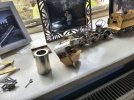
I also made the parallel smokebox section, punching the rivets first. The wrapper in the kit had been rolled without first forming the rivets, so that went in the bin-o-shame with the rest of the etched boiler parts.

I thought the next thing would be to fit the cab to the chassis. I used the bottom of the cab as a datum point and the cab needed a 0.6 mm spacer to raise the cab bottom to the correct height above the rails. I used the kit boxy fixing thingy to screw the cab to the chassis. The next job was to get the buffers to the correct height. I added some 1.5 mm extensions to the chassis frames to raise the front platform to achieve this. To my horror this pitched the upper footplate about 1.8 mm too high (remember I havd already extended the sloping part of the footplate). I shortened the sloping part of the footplate, and moved both cut outs in the valences to clear the mechanical lubricators. The footplate didn't quite reach the front of the cab, and when I'd completed loads of measurements, I realised the rear of the chassis was too long by about 1.2 mm. I cut a strip off the rear of the chassis and then the cab front sat in the correct place with respect to the rear driving wheel centre. More importantly the footplate would now connect with the front of the cab. The slots in the cab designed to accept the tabs on the end of the footplate were too low, so I cut off the tabs. I added some 1.5 x 1.5 mm brass angle to the underside of the footplate to attach it to the cab and to correct the wrong profile of the end of the footplate (remember I changed the angle of the front of the cab).
Finally the footplate sat in the correct position.


I made a new smokebox saddle to place the bottom of the boiler at the correct height, and corrected the cut out in the sloping part of the footplate through which the smokebox passes.
I thought I'd better finish the week by making the firebox. I assumed (there's that dangerous word again) that the profile of the firebox clothing would match the cut out in the cab front through which it passes. I have a drawing of the cab but not the boiler. I reduced the size of the cab drawing on my copier to that of O gauge and cut out a template.
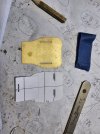
The etch is from the kit.
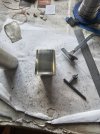
The GA shows that the footplate edge alongside the firebox slopes, presumably parallel with the firebox (more assumptions). The drawing did show the length of the firebox, so I now had all the 'measurements' to fabricate one.


At this point my son walked into my workshop to announce that he had just got his first engineering job post-uni. I packed up and we drank a lot of Cremant.
I finished the last few things on the cab and decided to make the boiler. I have an engineer in the house (for now) and he happily drew me the conical part of the boiler and produced a cutting template to produce the wrapper.
I also made the parallel smokebox section, punching the rivets first. The wrapper in the kit had been rolled without first forming the rivets, so that went in the bin-o-shame with the rest of the etched boiler parts.
I thought the next thing would be to fit the cab to the chassis. I used the bottom of the cab as a datum point and the cab needed a 0.6 mm spacer to raise the cab bottom to the correct height above the rails. I used the kit boxy fixing thingy to screw the cab to the chassis. The next job was to get the buffers to the correct height. I added some 1.5 mm extensions to the chassis frames to raise the front platform to achieve this. To my horror this pitched the upper footplate about 1.8 mm too high (remember I havd already extended the sloping part of the footplate). I shortened the sloping part of the footplate, and moved both cut outs in the valences to clear the mechanical lubricators. The footplate didn't quite reach the front of the cab, and when I'd completed loads of measurements, I realised the rear of the chassis was too long by about 1.2 mm. I cut a strip off the rear of the chassis and then the cab front sat in the correct place with respect to the rear driving wheel centre. More importantly the footplate would now connect with the front of the cab. The slots in the cab designed to accept the tabs on the end of the footplate were too low, so I cut off the tabs. I added some 1.5 x 1.5 mm brass angle to the underside of the footplate to attach it to the cab and to correct the wrong profile of the end of the footplate (remember I changed the angle of the front of the cab).
Finally the footplate sat in the correct position.
I made a new smokebox saddle to place the bottom of the boiler at the correct height, and corrected the cut out in the sloping part of the footplate through which the smokebox passes.
I thought I'd better finish the week by making the firebox. I assumed (there's that dangerous word again) that the profile of the firebox clothing would match the cut out in the cab front through which it passes. I have a drawing of the cab but not the boiler. I reduced the size of the cab drawing on my copier to that of O gauge and cut out a template.
The etch is from the kit.
The GA shows that the footplate edge alongside the firebox slopes, presumably parallel with the firebox (more assumptions). The drawing did show the length of the firebox, so I now had all the 'measurements' to fabricate one.
At this point my son walked into my workshop to announce that he had just got his first engineering job post-uni. I packed up and we drank a lot of Cremant.

Richard Spoors
Western Thunderer
That's really good news!Loco construction has been constrained this week as we have had builders renovating our bathroon, which is next to my workshop. It is hard trying to concentrate with tiles being bashed off a wall within a metre of my head. Also I didn't do myself any favours by doing aversion building, saving all the hard bits until later!
I finished the last few things on the cab and decided to make the boiler. I have an engineer in the house (for now) and he happily drew me the conical part of the boiler and produced a cutting template to produce the wrapper.
View attachment 263485
I also made the parallel smokebox section, punching the rivets first. The wrapper in the kit had been rolled without first forming the rivets, so that went in the bin-o-shame with the rest of the etched boiler parts.
View attachment 263486
I thought the next thing would be to fit the cab to the chassis. I used the bottom of the cab as a datum point and the cab needed a 0.6 mm spacer to raise the cab bottom to the correct height above the rails. I used the kit boxy fixing thingy to screw the cab to the chassis. The next job was to get the buffers to the correct height. I added some 1.5 mm extensions to the chassis frames to raise the front platform to achieve this. To my horror this pitched the upper footplate about 1.8 mm too high (remember I havd already extended the sloping part of the footplate). I shortened the sloping part of the footplate, and moved both cut outs in the valences to clear the mechanical lubricators. The footplate didn't quite reach the front of the cab, and when I'd completed loads of measurements, I realised the rear of the chassis was too long by about 1.2 mm. I cut a strip off the rear of the chassis and then the cab front sat in the correct place with respect to the rear driving wheel centre. More importantly the footplate would now connect with the front of the cab. The slots in the cab designed to accept the tabs on the end of the footplate were too low, so I cut off the tabs. I added some 1.5 x 1.5 mm brass angle to the underside of the footplate to attach it to the cab and to correct the wrong profile of the end of the footplate (remember I changed the angle of the front of the cab).
Finally the footplate sat in the correct position.
View attachment 263487
View attachment 263488
I made a new smokebox saddle to place the bottom of the boiler at the correct height, and corrected the cut out in the sloping part of the footplate through which the smokebox passes.
I thought I'd better finish the week by making the firebox. I assumed (there's that dangerous word again) that the profile of the firebox clothing would match the cut out in the cab front through which it passes. I have a drawing of the cab but not the boiler. I reduced the size of the cab drawing on my copier to that of O gauge and cut out a template.
View attachment 263489
The etch is from the kit.
The GA shows that the footplate edge alongside the firebox slopes, presumably parallel with the firebox (more assumptions). The drawing did show the length of the firebox, so I now had all the 'measurements' to fabricate one.
View attachment 263490
View attachment 263491
View attachment 263492
At this point my son walked into my workshop to announce that he had just got his first engineering job post-uni. I packed up and we drank a lot of Cremant.
Nick Dunhill
Western Thunderer
I went into my workshop on monday and stared at the firebox. I'd been putting off making the firebox fit the cab and chassis top for long enough. I put on my big boy's pants and did it. It required a lot of measuring.
I started with where the bottom of the boiler had landed on the saddle, then transferred that measurement to the rear of the boiler. Luckily the bottom of the boiler sat 5.5 mm above the top of the frames and I had a 5.5 mm drill to use as a spacer/support. According to the GA the top of the rear of the boiler sits 1.6 mm below the top of the firebox. I then transfered this measurement to where the firebox top lands on the cab front and could then measure down to where the top of the frames are. I transferred this measurement to the rear of the firebox. Following this so far?
I then took a L section of scrap brass and made it bang on 90 degrees. I tacked it to the front of the cab so it was up against the inside of the frames, and transferred the profile of the frames onto it with a scalpel blade. The profile was then transferred onto the side of the firebox and the measurements checked.....twice.
Bingo

Here's the profile tool

The boiler was then soldered to the firebox and the boiler bands and other details added.

The whole boiler assembly was solderd to the cab and saddle, which was surprisingly easy, as everything was sitting naturally in the correct position.
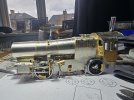
The next job I had been dreading was offering up the footplate. The footplates were etched parallel, and of course the firebox and rear section of the boiler are tapered. Lots of measuring and trail fitting ensued until it fitted. The toe kick upstand was added before the fooplate was soldered to the front of the cab and the underside of the smokebox.
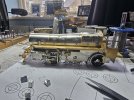
The last working day was spent fabricating the bit of the ashpan that drops below the bottom of the frames.


I think I have now broken the back of this one. I have to add lots of pipework and handrails and were there.
I started with where the bottom of the boiler had landed on the saddle, then transferred that measurement to the rear of the boiler. Luckily the bottom of the boiler sat 5.5 mm above the top of the frames and I had a 5.5 mm drill to use as a spacer/support. According to the GA the top of the rear of the boiler sits 1.6 mm below the top of the firebox. I then transfered this measurement to where the firebox top lands on the cab front and could then measure down to where the top of the frames are. I transferred this measurement to the rear of the firebox. Following this so far?
I then took a L section of scrap brass and made it bang on 90 degrees. I tacked it to the front of the cab so it was up against the inside of the frames, and transferred the profile of the frames onto it with a scalpel blade. The profile was then transferred onto the side of the firebox and the measurements checked.....twice.
Bingo
Here's the profile tool
The boiler was then soldered to the firebox and the boiler bands and other details added.
The whole boiler assembly was solderd to the cab and saddle, which was surprisingly easy, as everything was sitting naturally in the correct position.
The next job I had been dreading was offering up the footplate. The footplates were etched parallel, and of course the firebox and rear section of the boiler are tapered. Lots of measuring and trail fitting ensued until it fitted. The toe kick upstand was added before the fooplate was soldered to the front of the cab and the underside of the smokebox.
The last working day was spent fabricating the bit of the ashpan that drops below the bottom of the frames.
I think I have now broken the back of this one. I have to add lots of pipework and handrails and were there.
Last edited:
Nick Dunhill
Western Thunderer
This week was handrail and pipework week.
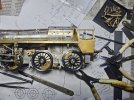

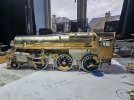
The conduit is made from 2.5 x 1 mm shallow channel.

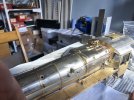


The lagged pipework was a challenge. I made it by rolling soft copper wire underneath a sharp scalpel blade held at an angle to give a helix indentation. Hope the paintwork doesn't wash it out.

I sent this pic to the client as a bit of a boost, and noticed that the tender front is too high. I'll have to rebuild the tender front to reduce the height by a millimetre, and reduce the bunker top to maintain the height ratio. How irritating! Other than this there's just more injector and lubricator pipework to make.
The conduit is made from 2.5 x 1 mm shallow channel.
The lagged pipework was a challenge. I made it by rolling soft copper wire underneath a sharp scalpel blade held at an angle to give a helix indentation. Hope the paintwork doesn't wash it out.
I sent this pic to the client as a bit of a boost, and noticed that the tender front is too high. I'll have to rebuild the tender front to reduce the height by a millimetre, and reduce the bunker top to maintain the height ratio. How irritating! Other than this there's just more injector and lubricator pipework to make.

Dave Holt
Western Thunderer
Annoying about the tender height issue at this stage.
The pipework, always so prominent on BR Standards, looks marvellous. Some of the earlier photos show drain pipes beong formed from the cylinder drain cock valve (LHS) and, I presume, the steam heating valve (RHS) but they do not appear later in the build. Are they removable because they cross the boundary between the body and the chassis?
Dave.
The pipework, always so prominent on BR Standards, looks marvellous. Some of the earlier photos show drain pipes beong formed from the cylinder drain cock valve (LHS) and, I presume, the steam heating valve (RHS) but they do not appear later in the build. Are they removable because they cross the boundary between the body and the chassis?
Dave.
Nick Dunhill
Western Thunderer
Hi Dave
Yes lots of the pipework is detachable for paint. mainly to maintain the metallic finish but sometimes to prevent damage while in the paint process. Things sticking out will inevitably get damaged by the painter.
I have had discussions with the client about the final finish, in this case a good amount of weathering to reflect the neglected condition of the loco when in its final months on the SR. I also referred to the painter Warren Haywood about the works finish of Standard locos in the period. It seams that often the big brass fittings (steam fountain, train heat control, vacuum ejector, injectors etc) were painted black, as was a lot of the pipework. In any event the whole lot would have got pretty grotty quickly and this loco didn't seem to be cleaned often when at Guildford.
I then asked Neil Podbery (weathering guy) how he would like the loco pipework presented to him to achieve the final finish, and then decided what pipework could be fixed (eg lagged pipes and cylinder drain pipes) and what needed to be left in a metallic condition, and therefore removed for paint.
It's a joint effort between builder and painters to achieve the best finish.
Yes lots of the pipework is detachable for paint. mainly to maintain the metallic finish but sometimes to prevent damage while in the paint process. Things sticking out will inevitably get damaged by the painter.
I have had discussions with the client about the final finish, in this case a good amount of weathering to reflect the neglected condition of the loco when in its final months on the SR. I also referred to the painter Warren Haywood about the works finish of Standard locos in the period. It seams that often the big brass fittings (steam fountain, train heat control, vacuum ejector, injectors etc) were painted black, as was a lot of the pipework. In any event the whole lot would have got pretty grotty quickly and this loco didn't seem to be cleaned often when at Guildford.
I then asked Neil Podbery (weathering guy) how he would like the loco pipework presented to him to achieve the final finish, and then decided what pipework could be fixed (eg lagged pipes and cylinder drain pipes) and what needed to be left in a metallic condition, and therefore removed for paint.
It's a joint effort between builder and painters to achieve the best finish.
Last edited:

spikey faz
Western Thunderer
I'm probably being a bit dimHere is all the above assembled.
View attachment 262051
I had to make a few motion pins and fasten the return crank to the middle driving wheel crankpin (a 12BA brass screw). My method of attaching the return crank is to drill and tap the return crank 12 BA. then screw the return crank onto the crankpin. The correct position of the return crank can be achieved by turning the screw in the wheel. When the return crank is tight and in the correct position the excess screw can be cut off and the return crank overlay added.
 but please can you elaborate a bit on how you attached the return crank. I think I've managed to do something similar on my Crosti build, but it was a bit of a fiddle and it would be handy to see how you achieved this.
Thanks, Mike
Nick Dunhill
Western Thunderer
Hi Mike.
I drill and thread the return crank 12 BA and screw it to the crankpin.
Firstly I assemble all the valve gear so that it articulates without any binding/tight spots. This prevents any hesitation of the loco running at low speeds and it prevents the return crank from unwinding itself. I always pay particular attention to get it all free moving but not flopping about crashing into other elements of the motion. This is the hard but essential bit.
I always have to exchange the stock Slater's centre wheel crankpin screws for longer items to accommodate the con rod etc. The longer screw is then located in the wheel moulding. They often self tap themselves into the wheel but not always, but I never glue them at this stage. Then I assemble all the valve gear as above. With Walschearts valve gear the con rod needs to be located so that it is parallel with the chassis frames. I often have to make distance pieces/shims to achieve this. The return crank is then screwed onto the crankpin to lock up all the top hat brass bearings. If the return crank isn't in the correct place when tight I can move the crankpin screw in the wheel (remember I didn't glue it into position) to obtain the correct final position. Then I glue the crankpin screw into the wheel. I cut the excess crankpin screw flush with the face of the return crank, and then tack the cosmetic overlay onto the face of the return crank. I solder and dress the return crank overlay when it is off the crankpin. The eccentric rod has to be attached then so it is free to move without conflict.
It is very fiddly but always works. On final fitment I place a dot of clear nail varnish on the threads inside the hole in the return crank. This acts as a temporary 'retainer' for the crank. I also do this on the crankpin nuts as a belt and braces measure.
I drill and thread the return crank 12 BA and screw it to the crankpin.
Firstly I assemble all the valve gear so that it articulates without any binding/tight spots. This prevents any hesitation of the loco running at low speeds and it prevents the return crank from unwinding itself. I always pay particular attention to get it all free moving but not flopping about crashing into other elements of the motion. This is the hard but essential bit.
I always have to exchange the stock Slater's centre wheel crankpin screws for longer items to accommodate the con rod etc. The longer screw is then located in the wheel moulding. They often self tap themselves into the wheel but not always, but I never glue them at this stage. Then I assemble all the valve gear as above. With Walschearts valve gear the con rod needs to be located so that it is parallel with the chassis frames. I often have to make distance pieces/shims to achieve this. The return crank is then screwed onto the crankpin to lock up all the top hat brass bearings. If the return crank isn't in the correct place when tight I can move the crankpin screw in the wheel (remember I didn't glue it into position) to obtain the correct final position. Then I glue the crankpin screw into the wheel. I cut the excess crankpin screw flush with the face of the return crank, and then tack the cosmetic overlay onto the face of the return crank. I solder and dress the return crank overlay when it is off the crankpin. The eccentric rod has to be attached then so it is free to move without conflict.
It is very fiddly but always works. On final fitment I place a dot of clear nail varnish on the threads inside the hole in the return crank. This acts as a temporary 'retainer' for the crank. I also do this on the crankpin nuts as a belt and braces measure.
spikey faz
Western Thunderer
Thanks Nick. That's really helpful. 
Mike
Mike

simond
Western Thunderer
It is very fiddly but always works
isn’t that the difference between an amateur and a pro?
the amateur practices til he gets it right, the pro practices til he can’t get it wrong.
Nick Dunhill
Western Thunderer
It is finished. Good grief, what a marathon.
I'm left with the feeling that Standards are all about the pipework, and lordy there's a lot of it!

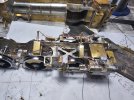


It'll have the DCC optimised in the morning and then be dismantled for painting.
I would guess that it would be possible to build a representation of a 77XXX from the Acorn kit. I had a GA and lots of other works drawings available so fell down the accuracy rabbit hole.
The tender was made from the etches without much of a struggle. I had to make lots of parts, and later lower the cab 'roof', but it was ok.
I started picking up dimensions from the GA for the loco frames. I modified them so much that there was no way that the etchings in the kit would fit without a lot of work-rounds. I used a fair number of parts from the kit, but the more the build progressed the more alterations were needed. I thought that it would just be quicker to scratchbuild the boiler assembly than make/modify a boiler from the kit etches.
I'm guessing you could build something 'as Jim intended' but we were looking for something a bit more authentic.
There's a lot more photos here; nick dunhill
I'm left with the feeling that Standards are all about the pipework, and lordy there's a lot of it!
It'll have the DCC optimised in the morning and then be dismantled for painting.
I would guess that it would be possible to build a representation of a 77XXX from the Acorn kit. I had a GA and lots of other works drawings available so fell down the accuracy rabbit hole.
The tender was made from the etches without much of a struggle. I had to make lots of parts, and later lower the cab 'roof', but it was ok.
I started picking up dimensions from the GA for the loco frames. I modified them so much that there was no way that the etchings in the kit would fit without a lot of work-rounds. I used a fair number of parts from the kit, but the more the build progressed the more alterations were needed. I thought that it would just be quicker to scratchbuild the boiler assembly than make/modify a boiler from the kit etches.
I'm guessing you could build something 'as Jim intended' but we were looking for something a bit more authentic.
There's a lot more photos here; nick dunhill

FuntleyWorks
Western Thunderer
I'm left with the feeling that Standards are all about the pipework, and lordy there's a lot of it!
You should try an Ivatt! Good to see it finished though!

paulc
Western Thunderer
Can't wait to see this painted and weathered, what a build .It is finished. Good grief, what a marathon.
I'm left with the feeling that Standards are all about the pipework, and lordy there's a lot of it!
View attachment 264613
View attachment 264614
View attachment 264615
View attachment 264616
View attachment 264617
It'll have the DCC optimised in the morning and then be dismantled for painting.
I would guess that it would be possible to build a representation of a 77XXX from the Acorn kit. I had a GA and lots of other works drawings available so fell down the accuracy rabbit hole.
The tender was made from the etches without much of a struggle. I had to make lots of parts, and later lower the cab 'roof', but it was ok.
I started picking up dimensions from the GA for the loco frames. I modified them so much that there was no way that the etchings in the kit would fit without a lot of work-rounds. I used a fair number of parts from the kit, but the more the build progressed the more alterations were needed. I thought that it would just be quicker to scratchbuild the boiler assembly than make/modify a boiler from the kit etches.
I'm guessing you could build something 'as Jim intended' but we were looking for something a bit more authentic.
There's a lot more photos here; nick dunhill
Nick Dunhill
Western Thunderer
It has returned from the magic Warren Haywood table of felt pens and has been re-assembled.
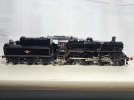
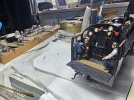
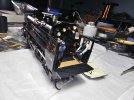

The kit was a Scorpio/Transport Age/Acorn kit. The tender etches were OK, but the locomotive could have done with one or two more parts that were the correct size and shape to reduce the bill. Although to be fair they were typical Jim Harris product, and maybe could have been built into a 10ft model, the Scorpio ammendments did help as well. The brief however was to make something a bit more prototypical.
The kit was a Scorpio/Transport Age/Acorn kit. The tender etches were OK, but the locomotive could have done with one or two more parts that were the correct size and shape to reduce the bill. Although to be fair they were typical Jim Harris product, and maybe could have been built into a 10ft model, the Scorpio ammendments did help as well. The brief however was to make something a bit more prototypical.

Ian@StEnochs
Western Thunderer
The standard 3s were a common sight when I was a schoolboy spotter. I saw all the Scottish allocation but I don’t remember them in that livery! Grimy grey muck was the norm.
I don’t build many kits now but there is a DJB version lurking under my bench. One day I may try to emulate your build
Ian.
I don’t build many kits now but there is a DJB version lurking under my bench. One day I may try to emulate your build
Ian.