magmouse
Western Thunderer
This discussion of baseboards is interesting for me at the moment as I am currently drawing up a design for laser-cut construction:

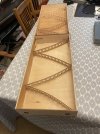
This is the fiddle yard board for my 777 project, 400mm x 1000mm. Changes from the standard G&H design are a denser supporting structure, which is also full depth (100mm). I'm hoping this will bring the necessary stiffness. My lightening/access holes are larger, so weight shouldn't go up too much.
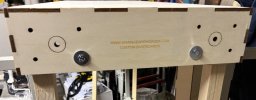
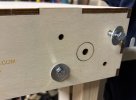
I will be changing the ends to a full double layer (6 + 6 = 12mm thick) to accommodate the pattern-maker's dowels. Joining bolt holes and handhold holes still to be drawn...
After that the more complicated main board:
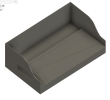
The sky background will have rounded corners made with a thin ply insert, bringing the footprint nicely within the 7 sq ft rule!
Nick.
This is the fiddle yard board for my 777 project, 400mm x 1000mm. Changes from the standard G&H design are a denser supporting structure, which is also full depth (100mm). I'm hoping this will bring the necessary stiffness. My lightening/access holes are larger, so weight shouldn't go up too much.
I will be changing the ends to a full double layer (6 + 6 = 12mm thick) to accommodate the pattern-maker's dowels. Joining bolt holes and handhold holes still to be drawn...
After that the more complicated main board:
The sky background will have rounded corners made with a thin ply insert, bringing the footprint nicely within the 7 sq ft rule!
Nick.