Unklian's G3 workbench .

unklian

Western Thunderer
Thank you Geoff, I did get to see that eventually, he's got a very strange way of going about it I thought .

Anyway some way back on the first page of this thread I showed the patterns for some buffers. Well they have been cast and I finally got round to taking a picture of them. Should you want some, Mr Williams has a few in stock now too. Only trouble is I got to see the real thing up close recently ( courtesy the Mid Suffolk Light ) and I now realise I have missed off a few details. Curses...RIMG4746.JPG
RIMG4781.JPG
 

Mike W

Western Thunderer
now realise I have missed off a few details. Curses...
Well, I've compared the pictures, the bolts style and sizes, the seam shape and size, the flange shape and bolts, the front ring, the general look and feel ... and I give up - what details are we talking about Ian? You cannot surely mean those tiny and flattened rivets holding the two halves together?

Mike
 

unklian

Western Thunderer
Yes Mike those little rivets, am I being too picky then ? I have to admit that in photos taken at more general/normal distances they are all but invisible.

Cheers Ian
 

unklian

Western Thunderer
surely that's a set of Y11(simplex) buffers?

Kerching !! another sale there. But seriously they would appear to be a standard product and I have seen them on all sorts of vehicles, including a pair of GWR bolster wagons aka Mites .

Thank you Ian
 
Last edited:

AndyB

Western Thunderer
I have a Midland Railway drawing (oh no, not another one I hear you groan!) showing a similar buffer which is described as being 'Gatwoods Patent'.
A Google search brings up a couple of links (which aren't working for me right now) relating to a patent of 1909 "Improvements in spring buffers for Railway Vehicles".
So I'm sure it was adopted in various forms by many different companies.
The MR version has 4 bolts in the end flange of each half of the casing (instead of the 3 shown above) and the ring at the outer end is not so prominant.

Andy
 

Attachments

  • 3807 Gatwood Buffer Part section.pdf
    119.5 KB · Views: 27
  • 3807 Gatwood Buffer End view.pdf
    116.1 KB · Views: 25

Mike W

Western Thunderer
Midland, GWR, Southern ... Looks like I'm gonna sell thousands of 'em!

But Ian, don't forget that 22A and 22B cast into the base ... err, but its a pressed steel base, not cast. Maybe its a part number on the drawing?

Mike
 

Mike W

Western Thunderer
That's interesting Andy. I didn't notice the thickness and assumed the improvement was in using cheap stamped parts. If it is cast then how is it better than the conventional type of cast iron buffer guide I wonder? I see it is self contained, but there were s/c buffers long before this.

Mike
 

Steph Dale

Western Thunderer
Quicker and therefore cheaper to manufacture. No mould core required y'see. It probably also reduced the number of reject castings and allowed the use of cheaper materials in both casting and production.

Well, it's a thought... ;)

Steph
 

AndyB

Western Thunderer
Material strength, loading and weight!
In a 'conventional' buffer guide, the housing is simply guiding the buffer rod - it will take some lateral loading when buffing on curves but no tensile loads. If the housing were to crack, it would not be catastrophic.
In a self-contained buffer, the housing is reacting the spring load - i.e. the housing is in tension. On one drawing I have, the spring 'force' in its fitted position is 18cwt, and 4 1/2 tons fully compressed.
Imagine that 4 1/2 tons being released in the space of <1 second in a rough shunt - that is quite a high tensile shock loading (someone else can do the calcs to work out the energy if they wish!). So a material with some ductility is needed.
Cast iron has about half the yield strength and less than half the ultimate tensile strength of even a low grade steel.
There may have been earlier self-contained buffers with CI housings - but I imagine they were either very heavy (increased wall sections to maintain the strength required), or they found out the hard way that cracking a CI casting in tension is like a portable ballistic weapon!

Andy
 

Steph Dale

Western Thunderer
Ah, I didn't pick up they were steel, in that case you're almost certainly correct. And yes, cast iron failures can be at least 'interesting' and frequently 'energetic' - there's a lot of stress in your average iron casting!

Steph
 

jamiepage

Western Thunderer
Excellent!
I thought those buffers rang a bell, and I've just found it. It seems as though Ken Werrett recorded a very similar set mounted on rebuilt M&SWJR timber wagon 244 so an enquiry is on its way to Mike Williams to see whether a set might still be available.
It's possible his field sketches merely recorded 'self contained buffers' or something, and he subsequently drew something representative rather than accurate, but it's good enough for me.
IMG_0008.JPG
 

Mike W

Western Thunderer
These are the RCH cast iron self-contained buffers used by the LNWR for the same job - conversion of dumb buffered timber wagons to comply with regulations. The LNWR's previous design had a parallel body.

Mike
 

Attachments

  • Buffer_dumb_conversion_plates.jpg
    Buffer_dumb_conversion_plates.jpg
    3.1 KB · Views: 14
  • Buffers_LNWR_and_RCH_self_contained.jpg
    Buffers_LNWR_and_RCH_self_contained.jpg
    3.4 KB · Views: 16

Mike W

Western Thunderer
Chaps,

I am in no way an expert in metallurgy, in fact I know very little about it, but are you quite sure that is a casting? I'm looking at the way on the drawing the casing is uniform thickness throughout and where the base is formed the inside is curved too. Wouldn't a casting be thicker there with a square edge?

And am I correct in thinking that stamped steel plate is more ductile than cast steel too?

But as I say, I know little about this in reality.

Mike
 

AndyB

Western Thunderer
Mike,
I'm not avoiding your (totally valid) questions - but we've somewhat hi-jacked Ian's thread already which is entitled 'G3 workbench'.
If Ian is happy, we can continue the discussion on metallurgy, pattern design and casting etc here - otherwise I think we should transfer to a new one before continuing this interesting exchange.

Andy
 

unklian

Western Thunderer
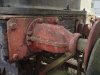
Carry on chaps, as long as it stays related to buffers, I think it is all relevant . I am still not sure that the original buffers were not pressed from thick steel sheet. We are talking about a product made in the days of furnaces and 100ton+ steam hammers/presses. I am also intrigued to know how the front ring is fixed to the two halves of the body, I suspect it is placed over the end of the body halves which are then riveted/swaged into the centre of the ring. The ring does not appear to be made in two halves. Its a shame the sample I saw close up was so rusty it was very difficult to make out any joins at all .
 

unklian

Western Thunderer
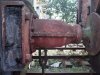
Thank you Steve,
Those are really good pictures of a variant I have just become aware of. And they are also fitted to a wagon I would like to build, guess that means some more pattern making at some point . Any more details of the Simplex BTW as Geoff Nicholls of this parish is hankering after building one ?

Cheers Ian
 
Top