When did NSWGR switch rail type?

Marc Dobson

Western Thunderer
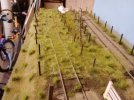
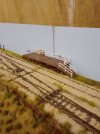
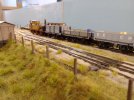
I'm sure someone here will know the approximate date that NSWGR switched from Bull head to flat bottom rail. I'm planning a layout that could be British or somewhere in New South Wales as I have both British and NSWGR P4 stock and it would be good if I could run them on the same layout (not at the same time). It would be a small industrial backwater circ 1900.
Marc
 

Overseer

Western Thunderer
I can't give a definitive answer for NSWGR but think it was similar to Victorian Railways. Bullhead rail was never used in Victoria, railways built up to 1863 (basically the main lines to Bendigo and Ballarat) were built with double headed rails in chairs and all the government lines after the 1860s was built with flat bottom rails and no chairs. The chaired track remained in use on the main lines until the early 20th Century (with replacement 80lb steel double headed rail) and was then progressively replaced with 80 or 100lb flat bottom rail. As a government owned railway capital expenditure was always harder to obtain so anything serviceable would be reused in sidings or short branches to army bases etc. There is still a short length of inside keyed chaired track in daily use in the Ballarat carriage shed/sidings.

NSW was similar, the early lines were double headed rail in chairs and I think by the 1870s they also adopted flat bottom rail. In the relatively dry climate in Australia steel rail remains serviceable on lightly used lines for well over 100 years so any early chaired track relaid in sidings could have lasted into the 1980s as it did in Victoria. The other thing that struck me looking through a book of early NSWGR photos was they seem to have ballasted to near the head of the rails in yards for most of the 19th Century, longer than elsewhere, so it is difficult to tell if the track is chaired or flat bottom and no need to model sleepers.
 

Overseer

Western Thunderer
Yes it could. To be realistic the fences should be further from the running line, plenty of space meant rail corridors were wide and out west often unfenced. The platform design is unlikely for NSW, earth filled platforms predominated or if timber larger beams with fewer vertical piles were used with fewer diagonal braces. Ironbark timber was often used, very durable, strong and available in large sizes. I was going to suggest that precast concrete buildings were typical on NSWGR but they didn’t appear until c1920 so weatherboard and corrugated iron for 1900. Adding a gum tree or two should make the intended location obvious.
 

AllanB_esq

New Member
Corrimal Coal Company in NSW had bullhead rail in the 1950s, and most industrial lines dating from around 1920s used old second hand bullhead rail. Rhondda Colliery near Newcastle had bullhead rail up at the head shunt. As for platforms, check Greg Edwards Data Sheets Datasheets As for fence distances, don't worry, the Wallsend branch near Newcastle had limited space and the fence was about 6ft from the track. Also, well ballasted track that was common at the 1900 era on the mainlines was level with the railhead. Timber buildings were common, but brick buildings were common in cities. Up until the 57 class 4-8-2 locomotives came into service is when they started to look at auto coupler knuckles (buckeye). If your track is overgrown, you can't tell what rail is there. Timber platforms were not uncommon, the halts on the Oberon branch for example were totally wood. I would say to add corrugated water butts where you can, they were everywhere, houses, station buildings and loco sheds.

Hope that helps.

 
Top