Hayfield1
Western Thunderer
I thought I better have my own thread about my experimenting with 3D printed track in 7mm scale, for some years now I have been building trackwork mainly in 4mm scale. Basically the visual quality of ready to run and some of the kits available have in my opinion been lacking visually in basic geometry and chair representation.
Rather than getting better over time with the demise of Exactoscale's P4 track company kits the situation got worse and modelers were forced to scratch build thankfully with Exactoscale's chair range from the kits which are still available. In 7 mm scale the choice of chair options has got much worse since the demise of Shapeways who sold prints from the Off the Rails range
Templot has been the best 2D track planning software for years and thanks to Martin Wynne's computing skills making basic plans (templates in Templot speak) very easy to use of not just basic turnouts but diamonds, slips, three ways etc for the modeler with basic computer skills
I guess for the past decade Martin has indevoured to add 3D to Templot's repertoire, mainly looking at 4mm scale with a system caller plug track (chairs which plug into sleepers and timbers. By last year (if not longer) it was possible in 4mm scale and upwards to either filament print or laser cut track bases and resin print chairs
I guess Martin has seen a tremendous improvement in the ability ow the quality of printing. Earlier on this year Martin tried an experiment in printing the plug chairs with one of the (slightly) better quality filament machines and it was found the print quality was far better than expected. To cut a story short after a lot of experimenting and tweaking COT track (chairs on timbers) emerged. On two other threads I have shown some of its evolution, but I don't want to take either over So I thought I would have a thread where I can share my further experiments and perhaps have a 2 way chat about it
Can I say at the outset to produce these is not just about buying a 3D printer, in fact this in the end was the easiest skill to learn. But first you need to learn basic Templot skills, then learn the Templot 3D process, finally learn the 3D printing process. Its not a quick fix and the system is still in development
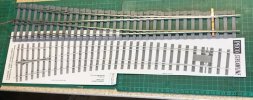
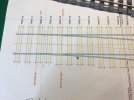
Firstly why bother, I would like to think this photo illustrates why so many scratch build their turnouts, other than the copperclad tiebar (which will be replaced) I think the look of the prototype is much closer.

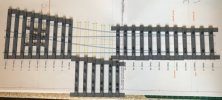
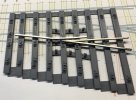
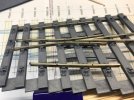
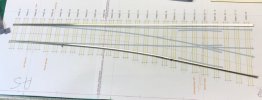
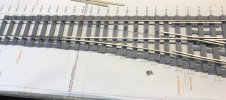
Unless you have a very large printer, the turnout is printed in sections (in Templot they are called bricks). This is an A5 turnout where I have printed the first and third sections, it's been designed to 0MF (31.5mm) standards simply to give better running when using modern wheels
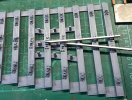
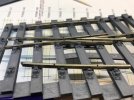
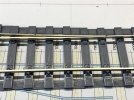
Whilst the magnification and light amplify certain things, once painted it looks fine, the main point is the detailed chairs, in the case it's the switch where the special chairs bridge the gap between the slide chairs and more normal chairs P chair positions P1 to P4

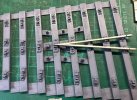
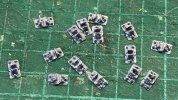
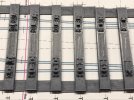
This is the common crossing chairs A, B, C & X, not only the correct chairs but daylight between the Vee and wing rails
When you have your own printer the actual cost is very low, so anyone with a little expertise could recoup the cost of the printer after building a few turnouts, but for me the important factor is both the visual appearance and the level of chair detail
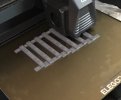
The third brick being printed, timbers have been formed as have the chair bases
I now hope over the following weeks to describe how I build a test track, both to test some locos I am building and to test the system
Please feel free to join in with the thread, happy to try and answer any questions and or discuss this new and exciting development in track building technology
Rather than getting better over time with the demise of Exactoscale's P4 track company kits the situation got worse and modelers were forced to scratch build thankfully with Exactoscale's chair range from the kits which are still available. In 7 mm scale the choice of chair options has got much worse since the demise of Shapeways who sold prints from the Off the Rails range
Templot has been the best 2D track planning software for years and thanks to Martin Wynne's computing skills making basic plans (templates in Templot speak) very easy to use of not just basic turnouts but diamonds, slips, three ways etc for the modeler with basic computer skills
I guess for the past decade Martin has indevoured to add 3D to Templot's repertoire, mainly looking at 4mm scale with a system caller plug track (chairs which plug into sleepers and timbers. By last year (if not longer) it was possible in 4mm scale and upwards to either filament print or laser cut track bases and resin print chairs
I guess Martin has seen a tremendous improvement in the ability ow the quality of printing. Earlier on this year Martin tried an experiment in printing the plug chairs with one of the (slightly) better quality filament machines and it was found the print quality was far better than expected. To cut a story short after a lot of experimenting and tweaking COT track (chairs on timbers) emerged. On two other threads I have shown some of its evolution, but I don't want to take either over So I thought I would have a thread where I can share my further experiments and perhaps have a 2 way chat about it
Can I say at the outset to produce these is not just about buying a 3D printer, in fact this in the end was the easiest skill to learn. But first you need to learn basic Templot skills, then learn the Templot 3D process, finally learn the 3D printing process. Its not a quick fix and the system is still in development
Firstly why bother, I would like to think this photo illustrates why so many scratch build their turnouts, other than the copperclad tiebar (which will be replaced) I think the look of the prototype is much closer.
Unless you have a very large printer, the turnout is printed in sections (in Templot they are called bricks). This is an A5 turnout where I have printed the first and third sections, it's been designed to 0MF (31.5mm) standards simply to give better running when using modern wheels
Whilst the magnification and light amplify certain things, once painted it looks fine, the main point is the detailed chairs, in the case it's the switch where the special chairs bridge the gap between the slide chairs and more normal chairs P chair positions P1 to P4
This is the common crossing chairs A, B, C & X, not only the correct chairs but daylight between the Vee and wing rails
When you have your own printer the actual cost is very low, so anyone with a little expertise could recoup the cost of the printer after building a few turnouts, but for me the important factor is both the visual appearance and the level of chair detail
The third brick being printed, timbers have been formed as have the chair bases
I now hope over the following weeks to describe how I build a test track, both to test some locos I am building and to test the system
Please feel free to join in with the thread, happy to try and answer any questions and or discuss this new and exciting development in track building technology