7mm Mickoo's Commercial Workbench

mickoo

Western Thunderer
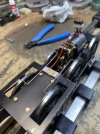
Question for the hive, just setting up and running in a model for DCC with Slaters plungers and it stopped running after an hour, inspection reveals the plungers have worn down to the limit of their travel, now I can add more travel but it's only going to carry on wearing.

The rear is the worst as it had the most travel, the middle ran out sometime earlier I suspect. both are free to move in the sleeves and the springs are nice and light.

Is this normal, I'm thinking new turned nickel silver ones will the best long term way forward.
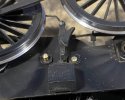
Image1.jpg
 

James

Western Thunderer
Question for the hive, just setting up and running in a model for DCC with Slaters plungers and it stopped running after an hour, inspection reveals the plungers have worn down to the limit of their travel, now I can add more travel but it's only going to carry on wearing.

The rear is the worst as it had the most travel, the middle ran out sometime earlier I suspect. both are free to move in the sleeves and the springs are nice and light.

Is this normal, I'm thinking new turned nickel silver ones will the best long term way forward.

View attachment 259280
That's far from normal I'm afraid, the NRM I'd expect set up plungers to last years before they needed replacing. That would be hundreds of real miles without need to adjust or do anything really to keep everything as it should be.
 

mickoo

Western Thunderer
I've had them go like that....also see that they are £17 + a set now....ouch!! will not be using
them anymore.
John
Quite a bit of feedback on social media elsewhere suggests the brass is quite soft and several others have had them go like this and the main culprit is the wheel rears which can be very rough and chew through the plungers in no time. Don't really want to strip the whole chassis down and skim/polish the rears so all the plungers have now been removed (all were worn to some extent) and phosphor bronze wire wipers on the rims fitted in their place.

Normally on a green field build I use nickel silver micro plungers and rub the wheel rears or the wire rim method above, but this came full finished and weathered so don't really want to be undoing all that, I would if I had to and there was no other way but I'd rather not.
 

J_F_S

Western Thunderer
Although they have clearly stopped working, is there really that much actual wear here? The one on the right looks like it has barely worn the point off and the rate of wear (in terms of loss of length) would reduce significantly as the greater area came into play after the point was gone. I wonder if the issue might not be that there is insufficent travel available? I would have expected that once the wheels were dropped, the plunger would spring past the face of the wheel by some distance. Being a 4mm modeller, I have no experience of Slater's but I did once use Exactoscale plungers and you new they had worn out when only the spring was left! These seem to be sticking out so little (with the wheels out) that almost zero wear stopped the job. Surely that cannot be right?

Also, I wonder if the rear face of the wheels need a really good polish?
 

mickoo

Western Thunderer
Mick,

have a look here

Post in thread 'SimonD’s workbench'
SimonD’s workbench

cheap, effective, reliable.

Best
Simon
To be fair Simon I already do my own plunger pick ups (yours are a good design too) with 3D sleeves and turned NS plungers and micro springs, my issue here is that I didn't build this and was concerned that the wear after 1 hour running in was excessive.

Also, being fully built and weathered I wasn't keen on stripping the whole chassis down and refitting new plungers.

The general consensus (elsewhere) is that brass is (generically) too soft for plungers (but many have used them for years with no issues) and the main culprit is the rear of the Slaters wheels are agricultural machine tolerance and need polishing, yet again, not keen on a full strip down to polish the wheel rears.
 

simond

Western Thunderer
To be fair Simon I already do my own plunger pick ups (yours are a good design too) with 3D sleeves and turned NS plungers and micro springs, my issue here is that I didn't build this and was concerned that the wear after 1 hour running in was excessive.

Also, being fully built and weathered I wasn't keen on stripping the whole chassis down and refitting new plungers.

The general consensus (elsewhere) is that brass is (generically) too soft for plungers (but many have used them for years with no issues) and the main culprit is the rear of the Slaters wheels are agricultural machine tolerance and need polishing, yet again, not keen on a full strip down to polish the wheel rears.
Yes, I agree the wear is excessive. I guess it would also occur with NS, though maybe slower.

I always polish the backs of the wheels after I’ve put the crank pins in, and before I metal-black them. I appreciate you might not want to do the strip-down for that though.

The design came to me from David LO Smith, I can only claim the credit for redrawing for 3DP and using Premier coupling springs!

The fact that you can get them out without stripping the wheels off is a bit of a bonus too.

Cheers
Simon
 

mickoo

Western Thunderer
Can you just turn up some replacements from bronze?
I could, or even nickel silver, but they will also wear, albeit at a slower rate due to the rough wheel rear.

In the end I did the expedite option and fitted my usual phosphor bronze wire pick ups to the tops of the wheel rims, ideally I would have hidden them under the motion bracket and had the arms rise up vertically though modified slots in the bracket, however, even on top they're near invisible behind the splashers once darkened.

Neat, quick and reliable, I haven't done the rear axle as I find there's little need if you have DCC and a decent stay alive; besides if you only had a 0-4-0T then you can only pick up from two axles.

IMG_5049.JPEG

For those interested, the links in the NEM socket are for running and testing/set up on DC, simply remove the links and plug the chip in and off you go, a simple reliable way to convert DC to DCC or vice versa without the hassle of rewiring.

The epoxy is a lesson from experience, most connections break off where the solder ends and the bare metal wire begins; so a good dollop of epoxy bods it all together and also removes the risk of the solder pads shorting on anything. I do the same with the backside of the NEM plug (soldered pads) on the chip.
 

RichardG

Western Thunderer
The epoxy is a lesson from experience, most connections break off where the solder ends and the bare metal wire begins; so a good dollop of epoxy bods it all together and also removes the risk of the solder pads shorting on anything.

There are wiring and assembly practices available to greatly reduce the chances of failure of soldered connections. The main thing is to avoid putting any nicks into the wire strands. If there are nicks in the wire and the solder flows back to them then this makes a weak point waiting to fail.

DSC_2037.jpeg
(There is a trick of the light here, all strands are soldered)

I suggest:

1) Use a wire stripper designed to cut the insulation without putting nicks into the conductor. I use a Stripmaster 'Ideal'. Get dies to fit the wire you are using. Do not (ever) use a craft knife to cut the insulation.

2) There should be bare unsoldered strands visible next to the end of the insulation. Do not allow the solder to flow back to the cut end of the insulation.

3) The cut end of the insulation must be undamaged by heat.

4) All strands must be present(!) and visible. The solder should be holding the joint together, not encapsulating it.

5) Mechanically support the insulated part of the wire, but do not place tension on the connection. Swan neck loops will help here.

This is what I was taught as a student apprentice in 1981/2, but I don't think much has gone out of date except to say, a crimp (cold weld) is always better if you can arrange it. I've made hundreds of crimped connrections under layouts, but they are nigh impossible inside a loco.

The Stripmaster has been around for most if not all of this period. Prices of new ones are eye-watering, I would look for something secondhand. They don't need calibrating but they will last a lifetime.

Hope this helps.
 

mickoo

Western Thunderer
There are wiring and assembly practices available to greatly reduce the chances of failure of soldered connections. The main thing is to avoid putting any nicks into the wire strands. If there are nicks in the wire and the solder flows back to them then this makes a weak point waiting to fail.

View attachment 259425
(There is a trick of the light here, all strands are soldered)

I suggest:

1) Use a wire stripper designed to cut the insulation without putting nicks into the conductor. I use a Stripmaster 'Ideal'. Get dies to fit the wire you are using. Do not (ever) use a craft knife to cut the insulation.

2) There should be bare unsoldered strands visible next to the end of the insulation. Do not allow the solder to flow back to the cut end of the insulation.

3) The cut end of the insulation must be undamaged by heat.

4) All strands must be present(!) and visible. The solder should be holding the joint together, not encapsulating it.

5) Mechanically support the insulated part of the wire, but do not place tension on the connection. Swan neck loops will help here.

This is what I was taught as a student apprentice in 1981/2, but I don't think much has gone out of date except to say, a crimp (cold weld) is always better if you can arrange it. I've made hundreds of crimped connrections under layouts, but they are nigh impossible inside a loco.

The Stripmaster has been around for most if not all of this period. Prices of new ones are eye-watering, I would look for something secondhand. They don't need calibrating but they will last a lifetime.

Hope this helps.
Likewise, 39 yr career in electrical work.
 
Last edited:

RichardG

Western Thunderer
Likewise, 39 yr career in electrical work.

As a "student apprentice" I had about a month of training on Wiring and Assembly. The things I remember the most were fingers shredded by lacing cord (this was a very old-fashioned company even in 1982!) and being repeatedly told, "this is how engineers insist on soldering wires, this is the way we want it done". And being repeatedly marked, "capable of good work with more practice", which seems to hold true forty years on :))
 

mickoo

Western Thunderer
As a "student apprentice" I had about a month of training on Wiring and Assembly. The things I remember the most were fingers shredded by lacing cord (this was a very old-fashioned company even in 1982!) and being repeatedly told, "this is how engineers insist on soldering wires, this is the way we want it done". And being repeatedly marked, "capable of good work with more practice", which seems to hold true forty years on :))
Each to their own, I was taught different.

Never possessed (or even recall using) a fangly girly cable stripper; it was side cutters or Stanley knife and get on with it boy! I taught all my apprentices the same, as that was how I was taught.
 

Yorkshire Dave

Western Thunderer
Neat, quick and reliable, I haven't done the rear axle as I find there's little need if you have DCC and a decent stay alive; besides if you only had a 0-4-0T then you can only pick up from two axles.

Personally I find the DCC stay alive is an unnecessary expense in main line tender and tank locomotives, especially if the tender and/or pony and trailing wheels is/are utilised for pick-ups. Even more so in diesels, electrics, emus and dmus with their all wheel pickup and longer bogie centres. A stay alive is certainly required in shunting locomotives.
 

Longbow

Western Thunderer
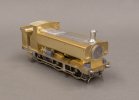
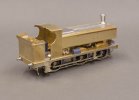
I've considered buying this kit. Is it actually an easy build please? Some tricky bending around the tanks and bunker perhaps? Asking as a novice.
 
Last edited:
Top