Hi All,
Michael mentioned this site and I just signed up. His build is amazing! The history of pneumatic locomotives is a fascinating - and an ever-evolving story as new information tumbles out of the past. What follows is a quick overview of their development in north America. Originally developed in England, pneumatic locomotives arrived in north America in 1874. The first few locomotives were built by Burnham, Parry, Williams & Co. (Baldwin Locomotive Works) for drawing street cars. In 1883 they built the first pneumatic locomotive dedicated to mining service for W H Brown. Brown did much of the design work and put the locomotive to work in a Pennsylvania coal mine. The locomotive had 9x14” cylinders with a main tank that could hold 400 PSI. When Brown needed a second locomotive, he ordered it from H K Porter instead of Baldwin. I am not sure why Brown switched manufactures, but it was Porter’s first pneumatic locomotive. Construction no 1239 was built in 11/1890 and was a single stage locomotive with 8x14” cylinders.
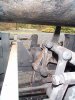
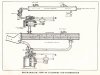
Other manufactures quickly followed suit. Early Porter, Baldwin, Vulcan and Dickson pneumatic locomotives all looked fairly similar. They typically had a high-pressure main tank (400 to 800 PSI) followed by a pressure reduction valve and an auxiliary tank around 125 to 200 PSI. From there the air went in parallel to both cylinders. You can see the auxiliary tank and parallel delivery pipes in Michael’s photos of the Bankhead locomotive. There are discussions of hauling upgrade to the mine followed by drifting downgrade to conserve air. However, I have not seen any references to regenerative braking and suspect that it was not done. There were some versions of the locomotives that applied reheaters to the auxiliary tanks to increase the efficiency. The reheaters used were either oil burners or hot water jackets. For the most part reheaters were not widely adapted – the added efficiency came with too much effort. In addition, for locomotives used inside a mine, burning oil reduced the benefit of clean air power.
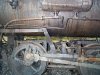
This all changed in 1908 when Porter introduced a two-stage locomotive with an atmospheric interheater. Charles Hodges had come up with the idea in 1904 and assigned the patent to the Porter Co. but it took a few years to perfect the design. The initial designs had some difficulties to overcome. The temperature of air drops when it does work and this drop can be substantial. The air temperature would drop 280 deg F when it left the high pressure cylinder. At – 220 deg F, stuff froze up – lubrication was an issue, ports became clogged with ice – it was a mess. Eventually they came up with a solid design. The two-stage design is where you will see the different sizes in the cylinders. The high-pressure cylinder is fairly small in comparison the low-pressure cylinder. For example, the first, two-stage locomotive (CN4187 built in 1908) had a 5x10” high pressure cylinder and a 10x10” low pressure cylinder. The photo Michael posted of locomotive at the Canmore Museum shows the two different sized cylinders very clearly. (The photo is at the start of his thread) Although Baldwin was first north American builder of a pneumatic locomotive and a much larger company, Porter controlled critical patents and had expertise in small locomotive production. Porter went on to dominate the short-lived pneumatic locomotive market. Production peaked in 1910 with 81 locomotives but competition from electric power decimated demand. About 500 hundred compressed locomotives were produced by Porter – about 80% of market . They built their last pneumatic locomotive in 1931 for the Homestake Mining Co. Although there are some disagreements in the records, it appears that Homestake used pneumatic locomotives until 1983. German engineers refined Hodges design and introduced three-stage locomotives but they were not used in north America.
Although the large north-American manufactures were gone, in the 1950’s there was a resurgence of sorts enabled by high torque, low speed rotary air motors used to drive muckers – however that’s another story.
I am looking forward to following Michael’s progress. I will post a project of mine on another thread,
Regards
Marty Johnston