7mm US model dabblings

mickoo

Western Thunderer
So back to the US for a short stint, well it's been chuntering along in the back ground, I should be doing the 47xx but after fighting one valance overlay this morning for three hours I decided that it had best be put to one side.....for it's own preservation!

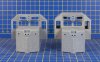
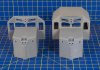
Truck evolution, after much back and forth I've finally got a set of trucks to fit, (hobby) SLA printing is rarely 1+1=2, sometimes it's 1.83, others it's 2.04, it's witchcraft and that's all there is to know :p

IMG_8760.jpg

On the left the original transom which I found out this week was the not the correct profile, the one on the right is correct.
IMG_8768.jpg

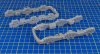
The trucks are three part assemblies due to my printer restrictions, especially if the side are printed in the same orientation as above, I.E longitudinally, I've also not cleaned up the remains of the support nubs, the criteria here is three parts that fit together and then fit the MTH brick.

The downside to long parts placed diagonally across the print area is that the witchcraft changes, what works for the middle of the area often doesn't at the extreme edges, thus the front and rear horn guides have a small amount of sheer in them.

If that were the only issue then I'd be happy as the shear error is easily hidden with the pedestal, springs and bearings and the complete truck will show no visual errors. But it's not, sadly the end beams also have a small amount of (for want of a better word....trapezoidal) sheer as well, the rear is no problem as it gets blended with the transom; but the front might be obvious on curves when it swings out slightly.

The reason for printing across the tank is that it reduces the height of the print, which significantly reduces the print time; these sides varied between three and four hours a side depending on settings.

The printer will easily take them standing vertically and more, such that it is now possible to blend all three parts into one unit and print vertically, however the print time will be akin to 13-14 hours. If your going to do that then you really need to make sure it bloody well fits once printed, which explains why all the current prints (flaws accepted) are flat to ensure exactly just that.

A vertical print will resolve the shearing issues but will almost certainly create new ones, so it might take several attempts to get it perfect, good job I ordered more resin :thumbs:
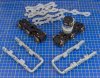
IMG_8764.jpg

At top of the photo are the previous test prints, each one a failure in some context, in fact one side on the left hand truck is also sub par but good enough to test the fitting to the MTH brick.

Having reached a point in the GEVO truck evolution where I can reasonably begin to think of other projects, it was time to open up some other boxes.

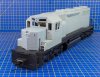
First up is an Atlas O SD35, an odd model in the EMD range, only 360 produced and all bar 29 ended up on the eastern side of the US. The SD35 was right in the middle of the horse power race in the mid 60's and was one of the last, if not the last development of the venerable 567 block, rated at 2500hp (edging it just ahead of the SD24) it was pushing the horsepower limits at the time.

Within a few years the 645 block became the standard and not until the SD40 did HP surpass the SD35.

The 29 units that headed west went to SP and to be blunt, SP ragged them hard, all were gone in 14 years, accident damage or simply worn out, several were refurbished, some with derated 645 blocks but at the end of the day, hard grueling pusher service and drag trains did them in.

Several/many worked in and around Cajon and Tehachapi, either as lead or more usually (especially on Tehachapi) as helpers either cut in or tail end. Toward the end many migrated to West Colton on 100+ car hump service or cross city transfer drags.

IMG_8755.jpg

The model came as a bare bones undercorated example, no glazing or fixtures, perfect really, sadly though it was an eastern Railroad high (hook) nose variant and the SP were low nose.

Unlike MTH the footplate is part of the main chassis, it is the chassis, which makes remedial work a bit harder, though it is possible to chuck in a semi authentic frame with a little effort.
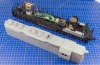
IMG_8757.jpg

I had banked on having to make a whole new cab front as well as short nose, but was pleasantly surprised to find an almost complete cab front under the high hood nose.
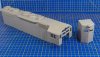
IMG_8759.jpg

The cab, long hood and tail end are all suitable for SP, SP did not fit any special light clusters to the rear of the SD35's, one unit did trial EMD designed snow covers (CN and CP took them for a lot of their EMD products though) over the engine intakes and I may well opt for that unit. The covers did and have seen use on on other SP and UP Spartan cab models, but not the SD35.

The SD35 also bucked the current trend of L shaped windscreens, kinda disappointing in that, but kinda glad as it's less work on the cab front.

I don't like the massively thick cab sides and fully intend to add an overlay here and open out the current openings to give a more flush finish look, like the GEVO. I do still have the old GP38 test cab and may well re-purpose that cab front overlay short term.

Short term I will draw up and print a new low nose with cut out for the SP light package and a new brow with number boards and headlight assembly.

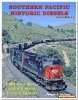
For reference the Strathpac Vol 21 has 40+ pages of details and info, more than enough to make a half decent stab at modeling a SD35 in So Cal.
18247173589.jpg
 

mickoo

Western Thunderer
Dave,

Mine will be the base model SD35 of the four R units that kept the 567 turbo block with big fat stack and ended up at West Colton on drags and humps.

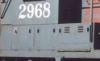
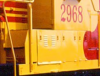
The other ten R units with non turbo 645 'weldment'...what ever that means (think its a 567 bed with 645 cylinders and heads) blocks ended up at Englewood TX and were fitted with rear light cluster packs. There's also additional reworks to the car body, most of which I haven't researched yet, primarily as I want to keep it as close to the model as possible. 2968 was a 645 weldment block and carried Kodachrome whilst based at Englewood.

No it won't end up like that piece of :shit: :p

Yes I have seen and trawled that site, handy for keeping track of engine #, some SD35 changed five, maybe six times?
 
Last edited:

Big Train James

Western Thunderer
Mick,
I almost certainly have an 81" nose and a number board housing in my stash of Atlas parts. If so, I could send them over. Of course, I doubt the nose is set up for the SP light package, nor any light at all probably. And then there's that postage and fees thingy to deal with, so it might not be worth the trouble anyway.

Also, I have a cad file for the 48" radiator fans, since you now have printing capability you could try them as an improvement on the Atlas versions. You'd need to do an etch for the grille and cap, what that's 30 or 40 seconds for you? :p:rolleyes::cool: Sorry I don't have a file for the 36" middle fan, but I'm a snob, I'm only interested in locos with 48" fans and above. :oops: Also I still need to work up the dynamic fans, as the bases are similar but different to the radiator fans. Guard rings and grilles are the same however.
I also have the 48" Q fans done, much thanks to the photos and measurements you gathered on your last trip out west. :thumbs: Not that you would need those for the sd35 though.
 

mickoo

Western Thunderer
James, thanks for the offer but fret not, I need to see if the printer will produce a nose, or items of that ilk, it may not, in which case it's a metal scratch build job. That'll probably be easy than hacking up an Atlas one truth be told.

Not sure the printer will cope with fans, a flat print would probably work but would leave visible layers on the casing side, might be able to fudge around that somehow, will ponder that in due course.

You did send some CAD files for bits and pieces, they're in the SD40-2T project ;):thumbs:

Can't recall what they were, so much junk on my PC now it's getting a handful to find the files I want, I'm sure I had a list or web page of US Railroad RAL colours.....can't seem to find it now.

I've got the EMD drawing for the 88" nose but no details on the class lights (if that's what they are called) so on the 3D nose I've managed to guesswork that rubber grommet is 9" dia, we'll see what it looks like when finished.

The first basic fit test run for the nose is in the printer at the moment, it'll be done in another eight hours.

The number boards came out okay I think, not etch crisp but certainly no worse that the plastic Atlas fidelity.

IMG_8771.jpg

IMG_8772.jpg

IMG_8773.jpg

It's just held in with stiction and will pull up tight when secured, then i can dress it in a bit better; just look at those Panzer thick cab walls....uugh.

For giggles I tried a basic knuckle duster latch and number board lamp cover on the underside, oddly, and annoyingly, there are layers visible, more so by the camera, they are barely visible to the eye and being on the underside I'm not overly fussed at the moment.

I need to play with some settings to try and tighten up the detail, but suspect I'm pushing the hobby printer I have.

IMG_8774.jpg
 

Big Train James

Western Thunderer
I'm in the same boat with the sheer volume of files I've downloaded in support of modeling efforts. There are items I know I have, but I usually can't find things anymore even if my life depended on it. It doesn't help that I have a second whole cache of data that migrated over from a previous computer, en masse, and has never really been sorted since. I do make efforts to sort everything periodically, but then it overwhelms me and sucks up all my energy and I lose motivation to continue.

I swear that at some point I found information on the class lights, but of course I can't lay my hands on it at the moment. I'll keep looking around and see if I can come up with anything. In the meantime, I will say that the class light blanking plates I drew for my sw1500 are 9" in diameter. Mind I've never put a tape on one of the prototypes. I think I based it on photos and how it related to the hood structure, as to what looked proper.

Sd35's would have had 81" noses. I'm not sure if you are saying you modeled it at 88", or just that you used the 88" nose drawing as a reference.

I know I sent you the typical twin sealed beam headlight. And I sent you the 48" radiator fan, but the second generation version without cap top grille. I do however believe that the fan base and guard ring are the same for the older style fan with the cap top grille. I have a knuckleduster latch drawing as well, but I don't know if I ever sent you that.

The Cannon and Company website is a useful reference for fan type and usage. They indicate that the sd35 48" fans had spiral grilles, with either 10 or 20 radial spokes, and 8 blade fans. The middle 36" fan was apparently also used for sd38 dynamics. It certainly appears to have the dynamic brake fan type base. What's interesting is that I thought that the radiator fans were AC motors, whereas the dynamic fans were DC and ran off the resistor grids.

Edit: I'm curious if you measured the class light openings on the existing hood? More usefully, I found an EMD drawing that lists the bolt circle on the mounting flange at 8" diameter, with the overall flange diameter at 9". Photos suggest the gasket overlaps the the flange by something like 3/8" to 1/2".
 
Last edited:

mickoo

Western Thunderer
Interesting data on the fans, AC motors are lighter and use less current, less load on auxiliaries. DC tend to be more hungry and interesting they are fed from the resistors. Makes sense as they will align faster under more load and act as extra load for braking.....very marginal.

But fed from the resistors is fraught, if they go open circuit then you'll loose the fans to, not that they'd have anything to cool mind lol.

Actually might be a good idea as when resistor banks go they can catch fire, ours on our cranes often do, you dont want to fan assist the blaze.

I think I've got or had the knuckle duster drawing but likewise can't remember, if you find it easily enough I'd like a second look, though the 3D printer might not manage a scale rendition or etching mind.

More later, meds and zzzs are calling :cool:
 

Yorkshire Dave

Western Thunderer
I'm sure I had a list or web page of US Railroad RAL colours.....can't seem to find it now.

The attached is a guide from the Model Railroad Hobbyist. It doesn't have the RAL codes but may assist.

I use it anyway since I use Vallejo acrylic paints for my locos and stock.
 

Attachments

  • MRH-Acrylic-painting-guide-post-Floquil-Landscape.pdf
    6.9 MB · Views: 18

mickoo

Western Thunderer
Well it took a week of testing and trials and a printer upgrade to get closer to what I want, it's still not perfect, truth be told, it's probably as good as it'll get for a hobby printer.

IMG_8780.jpg

IMG_8781.jpg

IMG_8784.jpg

The nose isn't quite sat down correctly leaving a gap just a touch too large under the sand box mechanism access doors and I also need to fine tune the handbrake opening and move it back a mm. There should be a small nibble to support the step on the battery box as the rear wall is set further back then the front edge of the step.

There's a few further tweaks to the overall shape and fine tuning of things like vents and latch clips before running off the final rendition.

I toyed with adding the sand filler and toilet vent fitting to the main casting, but reasoned they'd probably print better as individual parts; the final part to draw up and fit is the red Mars light unit, add a peg to it and make a corresponding hole in the nose recess.

The upgrade allows a lot more detail but it comes with it's own draw backs, so it's a case of having to relearn the sweet settings to get a decent print, even then there's still a little bit of post processing to do here and there.

Given the thinness of the raised shroud around the Mars light recess (due to the upgrade) I am seriously considering making a whole new cab front, this'll allow the correct shaped and profiled door to be fitted as well as recesses to give much finer glazing.

Interestingly, if I turn the cab sideways it may just be possible to physically fit and print it in 3D, that way I'd get recesses for all the windows and the rear door could be revamped as well.

Moving further on, you could also to the battery and control boxes each side as well.

Once you have those it's a small step to 88", 116" (single and dual slope) and 123" noses.

I'll revise and run off a new number board bar which should hopefully resolve some of the previous issues.

The details are perhaps a little over egged, though no where near as much as the RTR plastic details, hopefully they will tone down a little once painted and weathered.
 

Yorkshire Dave

Western Thunderer
Moving further on, you could also to the battery and control boxes each side as well.

In fact a whole new nose, cab and sub base! ;)

While you're at it check the louvers (louvres) on the sub base battery compartment doors and door positions, there are various options depending on the SD35 you've chosen. These are selective screenshots from t'interweb to illustrate what you probably already know.

SD35R - new sub base.
Screenshot_2020-04-18 2968_sp-sd35r.png Screenshot_2020-04-18 2968_spsf-sd35r.png

SD35
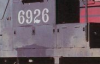
Screenshot_2020-04-18 6926_sp-sd35.png Screenshot_2020-04-18 6902_sp-sd35.png Screenshot_2020-04-18 3109_sp-sd35.png
 

Big Train James

Western Thunderer
That looks pretty nice. Agree that the access doors for the sand reservoirs have too large of a gap underneath, but you clearly have a handle on that already.

It's a shame that the whole international mail/duties and fees situation is so onerous, as many of the add on detail parts you want to use already exist as separate castings over here. But frankly it's not worth the hassle to buy the parts and send them over if you can generate good quality alternatives on site.

Note that the 88", 116", and 123" (and 102" if you want CP units) noses will all need the dash 2 era battery boxes/sub-base cabinets. It's not a major change, once the cad is done for the pre dash 2 cabinets, it's just a matter of changing their lengths as required.

I'm curious if the use of the printer indicates a change in philosophy for you? I feel like all of this would have been done in etch by you as recently as last year, at least for the sheet metal parts. Perhaps it's model specific, since you seem to have different "price points" that you build to depending on your desires for a particular model.

Ironically, I've been moving in the opposite direction. Whereas in the past I would have printed a lot of the things that I 3d modeled, I now look at them from the perspective of etch much more frequently. Cost of printing and resolution quality of printing are factors, but I also have had plenty of issues with prints warping or otherwise deforming for things like hood walls. I don't care for the results. Of course most of my experience really is with Shapeways, it appears that many of the new hobbyist printers make nice prints. I have done some wax printed parts as well, but that's a different purpose, for casting in brass or resin as opposed to being the end product.
 

mickoo

Western Thunderer
In fact a whole new nose, cab and sub base! ;)

While you're at it check the louvers (louvres) on the sub base battery compartment doors and door positions, there are various options depending on the SD35 you've chosen. These are selective screenshots from t'interweb to illustrate what you probably already know.

SD35R - new sub base.
View attachment 122159 View attachment 122160

SD35
View attachment 122161 View attachment 122162 View attachment 122163
Dave, you're spot on, I'm aiming for a prototype that matches the RTR bits as much as possible, having said that, I think I can now change to suit if I can dial in the printer a little better to cope with long parts.

As noted on the GEVO truck, long items tend to distort the further away you get from the middle of the build plate; the upgrade could help with that but I'll need to run some test prints off first.
 

mickoo

Western Thunderer
That looks pretty nice. Agree that the access doors for the sand reservoirs have too large of a gap underneath, but you clearly have a handle on that already.

It's a shame that the whole international mail/duties and fees situation is so onerous, as many of the add on detail parts you want to use already exist as separate castings over here. But frankly it's not worth the hassle to buy the parts and send them over if you can generate good quality alternatives on site.

Note that the 88", 116", and 123" (and 102" if you want CP units) noses will all need the dash 2 era battery boxes/sub-base cabinets. It's not a major change, once the cad is done for the pre dash 2 cabinets, it's just a matter of changing their lengths as required.

I'm curious if the use of the printer indicates a change in philosophy for you? I feel like all of this would have been done in etch by you as recently as last year, at least for the sheet metal parts. Perhaps it's model specific, since you seem to have different "price points" that you build to depending on your desires for a particular model.

Ironically, I've been moving in the opposite direction. Whereas in the past I would have printed a lot of the things that I 3d modeled, I now look at them from the perspective of etch much more frequently. Cost of printing and resolution quality of printing are factors, but I also have had plenty of issues with prints warping or otherwise deforming for things like hood walls. I don't care for the results. Of course most of my experience really is with Shapeways, it appears that many of the new hobbyist printers make nice prints. I have done some wax printed parts as well, but that's a different purpose, for casting in brass or resin as opposed to being the end product.
James, not a problem, you're right, many of these parts are already available, but it's time and cost that's prohibitive and more as often sourcing and availability.

The snoot noses come in several guises through out their lives, some with access doors, some with out and most are Railroad specific, but once you have the core mode it's pretty easy to change to suit.

Philosophy, not at all, until three weeks ago this would all have been etch, now that's not possible (certainly for the foreseeable future) so I was forced to look for alternatives and once I've looked it appears to have opened Pandora's box, certainly for some items.

It has made me re-evaluate what I want and how to achieve it, for example a 100% perfect nose would ideally be etched with overlays and other details. If you just want a nose then it falls well below the minimum sheet size, so you either need to fill it with something else or take the hit. As a rough ball park figure you're looking at $80-100 for a minimum sheet depending on material and chances are to get 100% you'd need a couple of sheets with different thicknesses, say 15 thou and 8 thou, lets round that out at $150.

On top of that there's the time to do the art work, lets say from green field to ready to print about 2 days, eight hours a day at (lets just grab a figure of $25/hr) gives $400.

At best the etchers will turn around in three weeks and if there's an error then there's the time to correct and a new set up.

So for a 100% accurate nose you're looking at $550-600 labour and components. People fail to realise how costly this malarky actually is, many write off the time aspect, you shouldn't, it's a critical part of the overall viability of something.

You could of course scratch build, but trying to cut out bezels for class lights and knuckle duster latches I think is beyond realism.

Now lets figure out 3D printing, 500ml of resin costs around $35 and for that I can probably print 7-10 noses depending on the amount of supports and orientation in the tank, that makes each nose cost between $3½ - 5. It took me four hours to draw the nose and perhaps another 2 making amendments as I went along, so for arguments sake lets round it up to eight hours or $200.

I accept that the printed nose is not 100%, close to 90-95% I'd say and if we take the 'delivery' time into account which is between 6 and 7 hours depending on settings it's certainly a much faster process.

In conclusion, 100% costs you at best $500... rounded it down a little ;), 95% costs you $205, so you have to ask yourself, is that extra 5% worth $295 of your time and materials, plus the 19 day saving on delivery schedules.

The figures are a little biased as I've not added in the time to actually make the etched model, clean off all the cusp, make it, make good all the joints and clean up, that's at least a day, possibly 1½ -2 days, so that adds another $3-400 on the etched value.

If we negate the time and say it's all for free and I'm doing it for fun (I don't subscribe to that, I think my time is far too valuable to waste and not justify) then just on raw materials, the difference is $3½ compared to $150. Granted the printer cost close to $1300 but you don't have to make many noses to reduce that initial cost to zero.

3D prints do have their limitations and the nose is about as big as I'd realistically go, a whole body is impractical and I suspect a whole cab will fall below my 95% benchmark, but for giggles it's worth a punt, it'll cost me a few hours in CAD and about $5 in resin. Certainly a new cab front is viable though, that may come to pass and meet my criteria.

Finally, once painted (if ever :p) you'd be hard pressed to tell the difference and I just watched a Overland D&RGW SD40-2T in SP colours go for over $1600 this evening. I can say outright, the nose detail was significantly poorer than my home baked 95% 3D print.

Each material and process has it's place and whilst etching is off the books..... the second GEVO test etch is actually sat in the pipeline if they ever go live again; until then I'll plunder the 3D cookie jar and see what falls out :cool:
 

Pencarrow

Western Thunderer
Skrawkers, some notes, these are my own thoughts and views on how they work from practical observations and experience.

First off the end result we are trying to achieve, skrawkers can be used for two things, making a groove to make a bend in the material, making a groove to cut the material. For the second part we just keep going until the depth feels right and then fracture what's left by bending between our fingers, the deeper you go, the easier to bend and fracture, but often you don't need to go as deep as you think, especially if you use a vice or other firm holding device on one side of the joint.

The first use is more interesting, it's use as a tool for making bends and creases.

I suppose the first step is to examine what we actually need to do, I'm sure this has been done to death before by many others more learned than me but here goes.
View attachment 46984

At the top left is a diagram showing a perfect skrawker cut, depth C is the critical measurement, the shallower this is the sharper the bend will be. To achieve a good 90° bend then gap A has to be at least 1½ times the thickness of the material, you might be able to get away with a little less but not much and probably no lower than 1.25x material thickness. At lower left is the material folded up, the thin material at C has produced a nice sharp corner and the 1½ material thickness at A has left a small gap along the joint, which we will seal with solder to strengthen the joint.

On the right we see a groove that is too shallow or a gap at A that is much less than 1½ material thickness, when we bend it the gap closes up too soon and we cannot get a nice sharp bend, in reality we would probably carry on bending this and end up with an even more distorted bend as the bending would travel back from the corner to the surrounding material.

I use a Tamiya skrawker, it's blade width is 0.52 mm which means it's safe to use on material up to about 0.34 mm thickness or 0.013". I could probably push it to 0.015" which would reduce the 1.5 ratio to about 1.3 or something and still get a nice crease but for materials above that then I'd have to use a bigger skrawker, or still use the Tamiya one for the depth but open the top of the cut with a triangular needle file.

When you take your first cut, do it just inside the front edge
View attachment 46985

If you try it like the left hand view then your digging straight into the face, it'll only end up in tears, either blood or a skrawker running amok and shooting off across the work surface, once it makes a groove, it will always try to track back to that and you won't get a neat groove, not much of an issue if the groove it to split the material, but for a bend it might show in the end result.

It is far better to start just inside the edge on a nice flat surface, however that will leave the first part not cut, so to get around this we cut from either end.

View attachment 46986

In the top image we draw to the right and after two cuts will have a small area shaded blue uncut, so we reverse the cut and come back the other way, the third and fourth cuts will soon remove that lump but create there own at the other end, which cuts five and six will remove...and so on.

I mentioned before about the last part of the cut digging deeper, the third and cuts show this, greatly exaggerated of course, but as the material in front of the blade reduces then it has a tendency to dig down. One way around this is to make the material wider, make your groove and then trim back the edge to where the groove is nice and level, you will also find when you look at the material from above it will have two fingers on each side as the material has been 'pulled' out of the groove.

View attachment 46990

It's hard to see and it' is really small we are talking about here, but if you run your finger over it you'll feel it.


View attachment 46991

If we blow up a previous image you can just see the fingers and end of groove deformation, it's just something to be aware of and focus on when cleaning up for a nice neat square corner, any gaps will be filled with solder anyway so you should end up with a nice neat finish.

That's about it, hope it helps.

Right, time to hit my Flickr groups and fill up my image collection, think I'll start with BNSF first, then CSX, UP and Euro zone :cool:

Enjoy

Very useful series of posts, thanks Mick.
 

mickoo

Western Thunderer
Hi Mick,

Just want to say, your explanation and expectations of the materials used, but more importantly the time it takes to prep, not forgetting cost, is one of the best things I’ve ever read on any modelling forum, it deserves a magazine article, (come on MRJ).

Regards

Gary
Why thank you young maaaann, so long as it provokes thought, it's achieved what I set out to accomplish.
 

mickoo

Western Thunderer
Oh now we're getting there :cool:

New cab front on the left, I combined the light board and wasn't sure if it would print okay, but it has :thumbs:

IMG_8786.jpg

IMG_8787.jpg

This was the first pass and there's a couple of fixes, the vents on the cab front under the engineers window need moving outboard and I'm going to reduce the windscreen gaskets by half their height. I also need to add the windscreen wiper holes and although there is a small hole for the door handle it's not printed too well, it's ended up as an indent so it could be drilled as a last resort.

There are recesses behind the windscreen glazing and it's reduced the thickness from the Atlas 2.5 mm to 1.0 mm, not as thin as etched metal and it may be possible to decrease that to around 0.6 mm.

The new cab front also allows me to model the correct SP enlarged screen on the engineers side above the nose and correct all the other windows to match the EMD dimensions, Atlas are kinda ball park.
Door hinges are added as is some sort of latch affair at the top, I'm going to guess an early form of bracket to pad lock the door shut as the door lock as no lock mechanism.

The door gasket is the earlier 'draughtier' type, later spartan cabs had an enlarged gasket which I don't think ever reached the SD35's.
 

mickoo

Western Thunderer
Mick, any info regarding the printer and software used.

Cheers

Gary
Software for the art work is Autocad, not particularity user friendly on 3D stuff, there are other better packages designed specifically for the 3D market, but they don't do 2D so well, which Autocad does.

As for the printer, please don't be offended if I decline to answer :cool:, it's used commercially so revealing all would be bad cricket.

It is one of the several hobby range printers and to be fair, most are pretty good these days and the figure quoted was when bought, they've come down in price quite a bit since then.
 
Top