Dog Star
Western Thunderer
Several months back John and I spent a few productive hours in trying to establish how we would ballast the trackwork and with what materials. How to do the task was fairly easy to decide and the method is described below.
Choosing the colour and texture has been a difficult and long drawn out affair as neither John nor I were around at the turn of the 19th century... and contemporary photos could provide an insight into texture without a lot of help as regards colour. Adrian (Buckjumper) has described some of the reasons why the B/W photos of circa 1900 ought not to be relied upon for indications of colour.
The written word has noted "old" ballast as being ash and slag, with a covering of congealed oil, coal and cinders; this description has driven our search through the Woodland Scenics range and we had almost settled upon a mix of fine cinders, medium cinders, a smattering of fine dark brown and a light dressing of fine soil. And then a member of the Basingstoke MRS offered a different route forward... with a bag of "grog" or spent foundry sand from a cast iron foundry in Witney. The colour and the texture are the closest to the pictures and description so far... sold!
John visited yesterday and we decided to ballast a scetion of the Up Goods line... and here is the result:-
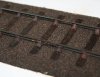
The spent sand was spread over the track and tamped into place with paintbrushes of different sizes and the flat of a 6" ruler. A mist of water / IPA / fairy was sprayed over the ballast to wet the material... leaving the ballast for a couple of minutes to ensure that the mist spray had gone to the bottom of the bed - a further misting being deemed necessary where the ballast was not uniformly wet. Woodlands Scenic Cement was applied with a bulb pipette carefully so as to not disturb the ballast... a second application of the glue was made some hours later to ensure adequate binding - use too much glue too early and the result is like e slag heap on the move.
Woodlands Scenic Cement is used in preference to PVA because the product dries clear and matt... and retains a springiness.
The result is not quite there yet, needs to be a tad darker and possibly with a binder to help with the desired impression of ash / slag that has been down for yonks. Plenty of scope for dry-brushing.
The next step in fettling of the track work is to decide on materials for the Up Main.
regards, Graham
Choosing the colour and texture has been a difficult and long drawn out affair as neither John nor I were around at the turn of the 19th century... and contemporary photos could provide an insight into texture without a lot of help as regards colour. Adrian (Buckjumper) has described some of the reasons why the B/W photos of circa 1900 ought not to be relied upon for indications of colour.
The written word has noted "old" ballast as being ash and slag, with a covering of congealed oil, coal and cinders; this description has driven our search through the Woodland Scenics range and we had almost settled upon a mix of fine cinders, medium cinders, a smattering of fine dark brown and a light dressing of fine soil. And then a member of the Basingstoke MRS offered a different route forward... with a bag of "grog" or spent foundry sand from a cast iron foundry in Witney. The colour and the texture are the closest to the pictures and description so far... sold!
John visited yesterday and we decided to ballast a scetion of the Up Goods line... and here is the result:-
The spent sand was spread over the track and tamped into place with paintbrushes of different sizes and the flat of a 6" ruler. A mist of water / IPA / fairy was sprayed over the ballast to wet the material... leaving the ballast for a couple of minutes to ensure that the mist spray had gone to the bottom of the bed - a further misting being deemed necessary where the ballast was not uniformly wet. Woodlands Scenic Cement was applied with a bulb pipette carefully so as to not disturb the ballast... a second application of the glue was made some hours later to ensure adequate binding - use too much glue too early and the result is like e slag heap on the move.
Woodlands Scenic Cement is used in preference to PVA because the product dries clear and matt... and retains a springiness.
The result is not quite there yet, needs to be a tad darker and possibly with a binder to help with the desired impression of ash / slag that has been down for yonks. Plenty of scope for dry-brushing.
The next step in fettling of the track work is to decide on materials for the Up Main.
regards, Graham


 .
.
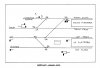

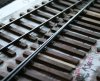
 . I oversprayed it to get rid of the jet black colour getting something more appropriate.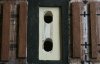



 Excellent!