I think it’s 60005.I wonder if the loco in #877 is in fact 60008 Dwight D.Eisenhower, a Kings X engine at the time of the photo and subsequently withdrawn in July 63.
Martin

You are using an out of date browser. It may not display this or other websites correctly.
You should upgrade or use an alternative browser.
You should upgrade or use an alternative browser.
Prototype Tim Mills' Photos
- Thread starter oldravendale
- Start date

Martin Shaw
Western Thunderer
It could well be, both 60005 Sir Charles Newton and 60008 Dwight D Eisenhower had similar length nameplates and both were coupled to non-corridor tenders however Sir Charles lived at Gateshead whose A4s were not common at the southern end of the ECML and later in 63 it went to St Margarets, so on balance I think I prefer my original thought.I think it’s 60005.

simond
Western Thunderer
Martin, Andy,I have identified the signal box interior in #876 as Hornsey No 1 which controlled the down lines and was located at the London end of the down platform. It dates from 1888 and was a GNR type 2 box, timber built with no ornamentation, and may have been supplied by McKenzie & Holland. The lever frame is a most likely a GN Duplex frame that was probably installed at some later date. The diagram to hand dated 1970 shows levers 8 & 14 working det placers on the down slow 1 & 2 respectively whereas the phtotgraph distinctly shows that they are spare. It closed in Dec 1974.
Andy
The loop handles are wire adjusters and note that they are adjacent to levers 7 and 12, the distant for Down Slow No 1 and inner distant for Down Slow No 2. The adjuster for lever No 2, the Down Fast distant is the worm wheel contraption on the front wall of the box visible in the gap where levers 5/6/7 are reversed.
Martin
Thanks for that explanation. Saved me asking

Can anyone explain the rod, pole or handle sticking out and down between levers 14&15?
ta
Simon
Martin Shaw
Western Thunderer
Yes I can. In my previous post #5320 I made reference to the wire adjuster on the front wall of the box. You will notice that the worm gear above the wheel has a (square) hole in the end of it for a handle that is currently sticking out between levers 14 and 15. It may well be located in another adjuster for lever 13 the Down Slow No 2 outer distant, which I suspect was probably rarely pulled which is why the adjuster handle rests there. In contrast No 2 the Down Fast distant will be operated for most if not all trains.
Martin
Martin

oldravendale
Western Thunderer
Following Graham's @Dog Star kind advice and by eventually finding the listing for the film in question I've added Edit notes to correct the erroneous first descriptions. I also appreciate the kind efforts by Martin @Martin Shaw and @40057 being made to dig me out of the poo by proposing that the loco may not be 60003. However I can confirm that it is Andrew K McCosh and even though it only just scrapes in to any sort of logic regarding dates it actually does so.
Thanks to Andy @AndyB and Simon @simond for the questions about the frame in the Hornsey box which Martin @Martin Shaw has kindly answered. Really useful stuff!
B1 61210, previously in post #2028 and here light engine at Potters Bar on 22nd December 1962. 61210 was a New England engine from March 1953 until it moved to Colwick in October 1963. It went to Doncaster in December 1965 from where it was withdrawn in February 1966. (SLS). It ended up at Drapers in Hull where it was scrapped in March 1966. (BR Database).

Previously in post #2389 is A3 60080 Dick Turpin on the down 12.45 Newcastle express at Potters Bar on 22nd December 1962. It left works with trough deflectors in November 1961 and was shedded at Ardsley at the time where it had been since July 1961 until it moved to Neville Hill in July 1963 and finally Gateshead in January 1964 where it was withdrawn in the following October. (SLS). It was scrapped at Draper's, Hull, by the end of the year. (Rail UK).

Disappearing in to the distance is A4 60007 Sir Nigel Gresley on the down 1.15 Leeds train at Potters Bar on 22nd December 1962. We’ve seen this loco on here more often than you can shake the proverbial stick at and most recently in posts #3004, #4053 and #4181. It had been a Kings Cross engine since June 1950, moving to New England in June 1963 thence to St Margarets in November and then Aberdeen Ferryhill in August 1964 where it was withdrawn at the beginning of February 1966. (SLS). For information about its life in preservation see 60007 Sir Nigel Gresley (LNER 4498, LNER 600, LNER 7 & BR 60007)


Brian
Thanks to Andy @AndyB and Simon @simond for the questions about the frame in the Hornsey box which Martin @Martin Shaw has kindly answered. Really useful stuff!
B1 61210, previously in post #2028 and here light engine at Potters Bar on 22nd December 1962. 61210 was a New England engine from March 1953 until it moved to Colwick in October 1963. It went to Doncaster in December 1965 from where it was withdrawn in February 1966. (SLS). It ended up at Drapers in Hull where it was scrapped in March 1966. (BR Database).
Previously in post #2389 is A3 60080 Dick Turpin on the down 12.45 Newcastle express at Potters Bar on 22nd December 1962. It left works with trough deflectors in November 1961 and was shedded at Ardsley at the time where it had been since July 1961 until it moved to Neville Hill in July 1963 and finally Gateshead in January 1964 where it was withdrawn in the following October. (SLS). It was scrapped at Draper's, Hull, by the end of the year. (Rail UK).
Disappearing in to the distance is A4 60007 Sir Nigel Gresley on the down 1.15 Leeds train at Potters Bar on 22nd December 1962. We’ve seen this loco on here more often than you can shake the proverbial stick at and most recently in posts #3004, #4053 and #4181. It had been a Kings Cross engine since June 1950, moving to New England in June 1963 thence to St Margarets in November and then Aberdeen Ferryhill in August 1964 where it was withdrawn at the beginning of February 1966. (SLS). For information about its life in preservation see 60007 Sir Nigel Gresley (LNER 4498, LNER 600, LNER 7 & BR 60007)
Brian
oldravendale
Western Thunderer
Apologies for the delay in putting up more photos recently, down to some domestic disturbance. However, an hour or so grabbed here allows us to continue:
In the open countryside near Saunderton on 14th April 1962 is 61XX 2-6-2T 6107. At the time it was allocated to Reading where it had been since September 1959 and from where it was withdrawn at the end of 1964. (SLS). It was scrapped in March 1965 (BR Database) at Buttigieg’s, Newport (WHTS).

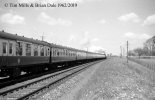
Two here of King Class 6007 King William III on an up Wolverhampton train on Saunderton Bank on 14th April 1962. This was a Stafford Road engine from October 1959 and was withdrawn in September 1962. (SLS). It went to Cox & Danks at Oldbury where it had been sold for scrap where the deed was dome on 27th February 1963. (BR Database).

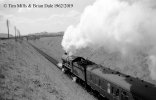
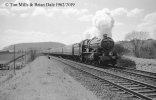
Previously in post #1821 is King 6000 King George V on an the down Cambrian Coast Express on Saunderton Bank on 14th April 1962, bell clearly in place on the buffer beam – at least in the first of the two photos. It had been a resident of Old Oak Common since 1952 and was withdrawn for preservation in early December 1962. (SLS). See 6000 King George V
Brian
In the open countryside near Saunderton on 14th April 1962 is 61XX 2-6-2T 6107. At the time it was allocated to Reading where it had been since September 1959 and from where it was withdrawn at the end of 1964. (SLS). It was scrapped in March 1965 (BR Database) at Buttigieg’s, Newport (WHTS).
Two here of King Class 6007 King William III on an up Wolverhampton train on Saunderton Bank on 14th April 1962. This was a Stafford Road engine from October 1959 and was withdrawn in September 1962. (SLS). It went to Cox & Danks at Oldbury where it had been sold for scrap where the deed was dome on 27th February 1963. (BR Database).
Previously in post #1821 is King 6000 King George V on an the down Cambrian Coast Express on Saunderton Bank on 14th April 1962, bell clearly in place on the buffer beam – at least in the first of the two photos. It had been a resident of Old Oak Common since 1952 and was withdrawn for preservation in early December 1962. (SLS). See 6000 King George V
Brian

JimG
Western Thunderer
Apologies for the delay in putting up more photos recently, down to some domestic disturbance. However, an hour or so grabbed here allows us to continue:
In the open countryside near Saunderton on 14th April 1962 is 61XX 2-6-2T 6107. At the time it was allocated to Reading where it had been since September 1959 and from where it was withdrawn at the end of 1964. (SLS). It was scrapped in March 1965 (BR Database) at Buttigieg’s, Newport (WHTS).
View attachment 251283
Nothing to do with the locomotive, but just think of the man power to dig out that cutting. That shot really emphasises the enormity of some of the earthwork carried out when building our railways.
Jim.

Yorkshire Dave
Western Thunderer
Nothing to do with the locomotive, but just think of the man power to dig out that cutting. That shot really emphasises the enormity of some of the earthwork carried out when building our railways.
Given this line was built under GW & GC Jnt auspices at the turn of the last century (1894-1905) I wouldn't be surprised if steam shovels were used. As we are at the northern edge of the Chiltern Hills, cutting through chalk would have been relatively easy.

AndyB
Western Thunderer
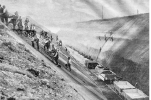
Picture here - and not a steam shovel in sight!Given this line was built under GW & GC Jnt auspices at the turn of the last century (1894-1905) I wouldn't be surprised if steam shovels were used. As we are at the northern edge of the Chiltern Hills, cutting through chalk would have been relatively easy.
Edit - link to the page where the picture came from
Andy


PhilH
Western Thunderer
The steam shovels may have moved on by the time the photo was taken...
Tony
Probably correct - the work in progress is grading the cutting sides to their final profile, work they couldn't do with a steam shovel.
Mike Walker
Western Thunderer
Steam shovels were certainly used for the major earthworks on the GC&GW Joint Line. Remember, this was around the start of the 20th century when such technology was available so why would you employ hoards of men to dig it by hand much more slowly?
As said, the picture above shows final work being done. The same goes for today. Visit a major road building site (or HS2!) in the early stages you'll see heavy plant at work. Go back later and they've moved on.
As said, the picture above shows final work being done. The same goes for today. Visit a major road building site (or HS2!) in the early stages you'll see heavy plant at work. Go back later and they've moved on.

Northroader
Western Thunderer
The line started off as a single line branch from High Wycombe to Aylesbury, which did follow the topography more closely. When the “cut off“ upgrading was done, turning it into a main route Paddington to Birmingham, the track was doubled, but the second track was placed in a deep cutting to ease the grade for southbound trains. This happened at a time when mechanical excavation was available.
Yorkshire Dave
Western Thunderer
The steam shovels may have moved on by the time the photo was taken...
The 'photo' looks very much like an artists impression or a very heavily retouched photographic plate. The distant background is just not there.
oldravendale
Western Thunderer
The Newton book of photographs of the building of the GC shows steam shovels in use.
oldravendale
Western Thunderer
Thanks all for the thoughts and comments. Doubtless I'm teaching granny to suck eggs but it was notable that the GCR running lines were, relative to other railways, quite flat. This was achieved through cuttings, embankments and viaducts and made use of the cutting edge technology of the time - things the earlier railways could only dream about. It also accounts for the line being relatively straight. I'm aware that the railways were being emasculated at the time the GCR was shut but it seems remarkable that the line was not mothballed. I guess that's all in hindsight, though, as railways were not expected to survive the road building programme of the time.
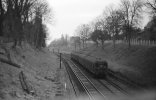
Black 5 45215 on an up special to Marylebone in the countryside near Saunderton on 14th April 1962. The loco had been allocated to Annesley since July 1960 and moved to Rose Grove in July 1965 where it was withdrawn in October 1967. (SLS). It was scrapped in January 1968 at Cashmore’s, Great Bridge. (BR Database).

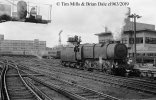
Q1 33013 at Waterloo Station around 1963 with what I believe to be a 4-LAV or similar electric unit in the background (but doubtless Dave @Yorkshire Dave will advise). The loco had belonged to Feltham since April 1948 and was withdrawn in July 1963. (SLS). It was scrapped at Cohen’s, Kettering in June 1964. (BR Database).
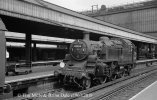
Two rebuilt West Countries at Waterloo at some time around 1963. The first appears in both photos. It’s 34037 Clovelly which was an Eastleigh engine from September 1962, then Nine Elms in June 1966 and back to Eastleigh in May 1967 where it was withdrawn two months later, at the end of SR steam. (SLS). It was scrapped at Cashmore’s, Newport in March 1968. (BR Database).
34026 Yes Tor was a Salisbury engine from November 1960 and withdrawn in September 1966. (SLS). BR Database propose a scrapping date of week ending 18th September 1966 but the Railway Observer advises that the loco went to Buttigieg’s, Newport where it was seen on 6th August and 6th October 1967 and WHTS has reports of it there on 21st October and 29th October the same year.


Standard Class 3 2-6-2T 82024 at Waterloo at some time around 1963. The SLS advise that the loco was allocated to Nine Elms in November 1962 where it was withdrawn in January 1966. It was scrapped at Cohen’s, Morriston in May 1966. (BR Database).
Brian
Black 5 45215 on an up special to Marylebone in the countryside near Saunderton on 14th April 1962. The loco had been allocated to Annesley since July 1960 and moved to Rose Grove in July 1965 where it was withdrawn in October 1967. (SLS). It was scrapped in January 1968 at Cashmore’s, Great Bridge. (BR Database).
Q1 33013 at Waterloo Station around 1963 with what I believe to be a 4-LAV or similar electric unit in the background (but doubtless Dave @Yorkshire Dave will advise). The loco had belonged to Feltham since April 1948 and was withdrawn in July 1963. (SLS). It was scrapped at Cohen’s, Kettering in June 1964. (BR Database).
Two rebuilt West Countries at Waterloo at some time around 1963. The first appears in both photos. It’s 34037 Clovelly which was an Eastleigh engine from September 1962, then Nine Elms in June 1966 and back to Eastleigh in May 1967 where it was withdrawn two months later, at the end of SR steam. (SLS). It was scrapped at Cashmore’s, Newport in March 1968. (BR Database).
34026 Yes Tor was a Salisbury engine from November 1960 and withdrawn in September 1966. (SLS). BR Database propose a scrapping date of week ending 18th September 1966 but the Railway Observer advises that the loco went to Buttigieg’s, Newport where it was seen on 6th August and 6th October 1967 and WHTS has reports of it there on 21st October and 29th October the same year.
Standard Class 3 2-6-2T 82024 at Waterloo at some time around 1963. The SLS advise that the loco was allocated to Nine Elms in November 1962 where it was withdrawn in January 1966. It was scrapped at Cohen’s, Morriston in May 1966. (BR Database).
Brian
Martin Shaw
Western Thunderer
The electric units in #890 are 2 x 2BILs and with what looks like a 28 headcode are on a Reading - Waterloo via Richmond service. They were a most comfortable unit to ride in, the picture takes me back to visiting my Aunt and Uncle in Staines 60 odd years ago.
Martin
Martin
Yorkshire Dave
Western Thunderer
The electric units in #890 are 2 x 2BILs and with what looks like a 28 headcode are on a Reading - Waterloo via Richmond service. They were a most comfortable unit to ride in, the picture takes me back to visiting my Aunt and Uncle in Staines 60 odd years ago.
The leading unit is a 2-BIL with a 2-HAL behind. The latter easily identified by the inset straight side for the cab door and the side corridor in the driving trailer only. The driving motor brake was all full width compartments. And yes 28 was Waterloo - Richmond - Reading. My dad managed to capture a pair of 2-HALs on a Reading-Waterloo 28 service approaching Wokingham 1962.
Q1 33013 at Waterloo Station around 1963 with what I believe to be a 4-LAV or similar electric unit in the background
4-LAVs were Central section units built for the 1933 Victoria/London Bridge - Brighton electrification and used on Brighton fast and semi-fast trains. They never operated from Waterloo.
The unit to the right of 33013 is also a 2-BIL and is on the Windsor Lines side of Waterloo.
2-BIL - Bi-Lavatory - there was a toilet in the driving trailer linked to the four first and four second class compartments by a side corridor and a toilet in the driving motor brake linked to the half (coupe) and six second class compartments by a side corridor. There was no corridor connection between the coaches.
2-HAL - Half-Lavatory - there was only a toilet in the driving trailer linked to the four first and four second class compartments by a side corridor. The driving motor brake was seven full width compartments. Again, there was no corridor connection between the coaches.