
You are using an out of date browser. It may not display this or other websites correctly.
You should upgrade or use an alternative browser.
You should upgrade or use an alternative browser.

Yorkshire Dave
Western Thunderer

For the record, the layer height was 0.1 and AMS humidity was 6%
The model has definitely printed better in PLA than PETG, there is some banding but generally the iron plates look passable
Support for the flanges is an issue and there is some stringing, probably less than the PETG.
Overall much better, but still not at resin levels of fidelity.
That one is worth painting and heavily weathering as a rust bucket - where the rust has eaten and split the flanges.

simond
Western Thunderer
Thanks Martin,@simond
Hi Simon,
You are not going to match resin with FDM, you can only hope to get close. Then decide if you can live with the difference for the lower cost of equipment and user-friendly FDM mess-free working.
But that looks very good. With a 0.2mm nozzle, a layer of 0.1mm is a bit too much. With layers much more than 40% of the nozzle diameter you lose dimensional control. For a 0.2mm nozzle I would suggest 0.06mm or 0.08mm layers.
I think 0.06mm layers would solve the problem with the side flanges. Maybe with a tweak to the CAD to put a slight draft angle on the underside of the flange.
0.06mm layers are going to increase the print time, but not necessarily by a lot. You could use the Height range modifier function to swap to 0.06mm layers for just the layers through the flanges and then back to maybe 0.08mm or 0.9mm elsewhere to save time.
6% RH is good. Are you using silica gel baskets in the AMS?
cheers,
Martin.
yes, I’m using the baskets and silica granules you kindly recommended.
I have just kicked it off again, overnight, using 0.05, for the 23 pence that it costs it’s probably worth the experiment. I don’t care how long it takes if I don’t have to watch it, but actually, it should only take 5 hours or so.
I don’t particularly want to modify the CAD, I’ve already printed a batch of these wagons using the resin printer, but it would interesting to see if similar results are possible with the FDM, as you say, it’s definitely simpler than resin, and it’s somewhat more robust.
cheers
Simon
Last edited:
simond
Western Thunderer
Cheers Dave, I think I’d need more inspiration/motivation, but I see where you’re coming from!That one is worth painting and heavily weathering as a rust bucket - where the rust has eaten and split the flanges.
Simon
simond
Western Thunderer

Much better but no cigar!
The wagon is pretty much perfect except at one end, quite curious. Subjectively the flat panel finish is less good but the flanges are much better. I guess making them wedge-shaped in section would perhaps improve this without making them look to heavy.

The rivets are mostly not too bad.
I think, if I really wanted to FDM print this wagon I could keep fiddling with settings and I’d get a good enough result, but for now, I’ll leave it.
simond
Western Thunderer
Rob,Simon,
Did you print thst upside down?
Sorry, missed your note yesterday.
No, on its solebars. I’d need to take the corner plates off to do it upside down
Cheers
Simon

Rob R
Western Thunderer
Thanks.Rob,
Sorry, missed your note yesterday.
No, on its solebars. I’d need to take the corner plates off to do it upside down
Cheers
Simon
Looking at the finish of the top flange, do you have ironing on "all top surfaces" or just "top surface"?
Would you be willing to share the file so I could have a play on my printer?
Rob

martin_wynne
Western Thunderer
@Rob R @simondLooking at the finish of the top flange, do you have ironing on "all top surfaces" or just "top surface"?
I have found that changing top surfaces to concentric produces a better result than ironing with a 0.2mm nozzle. It would remove those diagonal lines on the top flange:

Prints faster, too.
Martin.

Phil O
Western Thunderer
Thanks Martin,
I don’t particularly want to modify the CAD, I’ve already printed a batch of these wagons using the resin printer, but it would interesting to see if similar results are possible with the FDM, as you say, it’s definitely simpler than resin, and it’s somewhat more robust.
cheers
Simon
Simon,
Can you do a save as, with a different name and then you can modify it to your hearts content without damaging the original.
simond
Western Thunderer
Thanks Phil,Simon,
Can you do a save as, with a different name and then you can modify it to your hearts content without damaging the original.
I've been playing with CAD stuff for years - there comes a time with a given model that you think "do you know what, I really just don't want to do this any more" and I got there with this particular wagon about this time last year. It's a long story.
The only reasons I tried it was a) the model was already designed, and b) that it was such a contrast from the wooden RCH coal wagons, which printed really well after a bit of a learning curve, and I wanted to see whether it was viable to use an FDM approach for this type of model. My conclusion is that it is feasible but perhaps not the best use of the printer, or my time, to do so, whereas using the Saturn Resin printer for wooden wagons would, equally, perhaps not be the best choice.
I have plenty to keep me entertained!!!
Watch this space!
best
Simon

Lawrence Boul
Western Thunderer
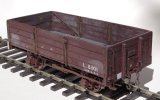
Why would the resin printer not be a good choice? This is 9mm (sitting on a bit of O gauge PECO), but I think it's a pretty good use of resin printing for something close in size to a British open in 7mm. Printed some years ago, so not high res by today's standards.

simond
Western Thunderer
Morning Lawrence,
I spent a good few months getting the resin prints to work on the N6 coal wagons.
It was at times frustrating, but the results were, to my eyes, worth it. Having acquired the FDM printer, I’m playing around to learn how to use it effectively, and to see what the problems and advantages can be. The resin is going to win in some areas, particularly fine detail, and the way the supports can be managed, but the FDM is cleaner, less hassle, and the prints are more robust/less brittle and less likely to warp. Also, materials, it’s possible to print transparent resin, and “rubber” FDM, for example.
Hopefully my observations are grist to the mill for anyone going down the same route.
best
Simon
I spent a good few months getting the resin prints to work on the N6 coal wagons.
It was at times frustrating, but the results were, to my eyes, worth it. Having acquired the FDM printer, I’m playing around to learn how to use it effectively, and to see what the problems and advantages can be. The resin is going to win in some areas, particularly fine detail, and the way the supports can be managed, but the FDM is cleaner, less hassle, and the prints are more robust/less brittle and less likely to warp. Also, materials, it’s possible to print transparent resin, and “rubber” FDM, for example.
Hopefully my observations are grist to the mill for anyone going down the same route.
best
Simon
Lawrence Boul
Western Thunderer
It was at times frustrating, but the results were, to my eyes, worth it. Having acquired the FDM printer, I’m playing around to learn how to use it effectively, and to see what the problems and advantages can be. The resin is going to win in some areas, particularly fine detail, and the way the supports can be managed, but the FDM is cleaner, less hassle, and the prints are more robust/less brittle and less likely to warp. Also, materials, it’s possible to print transparent resin, and “rubber” FDM, for example.
Hopefully my observations are grist to the mill for anyone going down the same route.
best
Simon
I know a few people who use FDM. They do good work and it does have advantages (Large scale resin is a pain to clean up). If I was doing Big Big Train in the garden I wouldn't hesitate. I think consistency is very important in any modelling. A broadly uniform approach lends a cohesive feel. For those agonising over etched engines (for example) I don't feel FDM cuts it. But not everybody wants extreme closeups that look real.
simond
Western Thunderer
Just had a read back, the N6 project started late 23, and consistently good (resin) wagons were achieved in spring 25.
There were several distractions along the way.
I feel there will be applications where FDM is the optimum technique, and others where 3DP of any sort is just not suitable. Horses for courses, but of course, without trying, it’s difficult to know what’s likely to reward, or frustrate.
There were several distractions along the way.
I feel there will be applications where FDM is the optimum technique, and others where 3DP of any sort is just not suitable. Horses for courses, but of course, without trying, it’s difficult to know what’s likely to reward, or frustrate.
Lawrence Boul
Western Thunderer
Like so many things, it may be less about the technique and more about ones knowledge and experience. I've done a lot or resin printing, so it's my go to and generally good first time with maybe an optimisation or two. I end up with a lot of versions, but that's less about printability and more about being unable to resist small improvements. With FDM, of course, it would be back to kindergarten.Just had a read back, the N6 project started late 23, and consistently good wagons were achieved in spring 25.
There were several distractions along the way.
I feel there will be applications where FDM is the optimum technique, and others where 3DP of any sort is just not suitable. Horses for courses, but of course, without trying, it’s difficult to know what’s likely to reward, or frustrate.
martin_wynne
Western Thunderer
Like so many things, it may be less about the technique and more about ones knowledge and experience.
I suspect it will be more about cost and user-friendliness. An FDM printer capable of printing a 7mm wagon costs £140 (Bambu A1 mini) and can be used on the corner of the kitchen table. Simple FDM printers are available as children's toys. Material costs are minimal. It's likely that an FDM printer will become as common among modellers as a soldering iron.
UV-resin printing is toxic and messy. It requires a workshop area away from living areas, and a means to exclude daylight while handling uncured resin. The results can be superb, but it's not for everyone.
Martin.

Hayfield1
Western Thunderer
Lawrence
There is no doubt at the moment resin prints still has the edge over FDM prints in fine detail, but over the past few years the gap is closing up fast
As martin and others have said, resin printing is smelly, messy and more difficult than FDM printing
With FDM prints, the simplicity of printing especially in the domestic area, coupled with its flexibility and strength is making 3D printing available to far more folk
Advances in both printers and filament as I said is closing the gap as is the strides in better software. I for one gave up on resin printing as it was too fickle especially when temperatures rose, not to say messy and time-consuming
In my mind over the next couple of years both FDM printers and filament will continue to improve, not to say programming of print files will improve, that is until the next jump in technology
John
There is no doubt at the moment resin prints still has the edge over FDM prints in fine detail, but over the past few years the gap is closing up fast
As martin and others have said, resin printing is smelly, messy and more difficult than FDM printing
With FDM prints, the simplicity of printing especially in the domestic area, coupled with its flexibility and strength is making 3D printing available to far more folk
Advances in both printers and filament as I said is closing the gap as is the strides in better software. I for one gave up on resin printing as it was too fickle especially when temperatures rose, not to say messy and time-consuming
In my mind over the next couple of years both FDM printers and filament will continue to improve, not to say programming of print files will improve, that is until the next jump in technology
John
Lawrence Boul
Western Thunderer
My point was really regarding @simond who has both - so cost didn't come in to it.I suspect it will be more about cost and user-friendliness. An FDM printer capable of printing a 7mm wagon costs £140 (Bambu A1 mini) and can be used on the corner of the kitchen table. Simple FDM printers are available as children's toys. Material costs are minimal. It's likely that an FDM printer will become as common among modellers as a soldering iron.
UV-resin printing is toxic and messy. It requires a workshop area away from living areas, and a means to exclude daylight while handling uncured resin. The results can be superb, but it's not for everyone.
Martin.
I don't think machine cost is a huge factor anyway. Entry level resin printers are not dear. I don't know where you got the idea that daylight needs to be excluded, but that's a fallacy. Direct sun on uncured resin is a very bad idea, but bright ambient light is fine for the the short periods routine actions take place outside the printer. My printers get direct sun every morning and have done for many years. But the other points are reasonable: Buying the printer is the least cost, it does involve chemicals and is not family friendly. But then neither is soldering.
The quality from a resin printer can exceed ready to run. A manufacturer producing RTR at FDM resolution would be pilloried. So yes, FDM has benefits, but the resolution isn't there. That may not always matter, and to some it won't matter at all.
The discussion on FDM printing a wagon was full of suggestions to tweak the process. Resin printing is no different. Cheap resins and the average Youtube advice will likely not lead to great results quickly.

This 1:64 wagon printed in 1 piece. It had etched axleguards (clip in) and a few bits of wire. No floor (etch or plastic), but build it in a hour. You won't be doing that with FDM.
Lawrence Boul
Western Thunderer
I'm not arguing that resin printing is for everyone. The discussion was about which of two technologies @simond had available would be best for the job.Lawrence
There is no doubt at the moment resin prints still has the edge over FDM prints in fine detail, but over the past few years the gap is closing up fast
As martin and others have said, resin printing is smelly, messy and more difficult than FDM printing
With FDM prints, the simplicity of printing especially in the domestic area, coupled with its flexibility and strength is making 3D printing available to far more folk
Advances in both printers and filament as I said is closing the gap as is the strides in better software. I for one gave up on resin printing as it was too fickle especially when temperatures rose, not to say messy and time-consuming
In my mind over the next couple of years both FDM printers and filament will continue to improve, not to say programming of print files will improve, that is until the next jump in technology
John